


Why AI in Customer Service Matters Now
Today’s customers expect immediate, personalized support across every channel. They want answers in seconds, not hours—and they’re increasingly intolerant of delays or generic responses. Traditional customer service models simply can’t keep pace with these expectations while maintaining reasonable operational costs.
AI in customer service is like a GPS for customer journeys—it anticipates roadblocks before they happen. It bridges the critical gap between speed, personalization, and scale that modern businesses struggle to balance. When implemented thoughtfully, AI doesn’t replace human agents but rather amplifies their capabilities, handling routine tasks so they can focus on complex issues requiring empathy and critical thinking.
Start Your AI Customer Service Transformation Today
Download our comprehensive 7-Day AI Implementation Plan with templates, checklists, and step-by-step instructions to transform your customer support operations.
4 Key AI Applications in Customer Service (Explained Simply)
AI is transforming customer service across industries, from retail to healthcare. Here’s how businesses are using these technologies to deliver better experiences while reducing costs:
🤖 Chatbots & Virtual Assistants
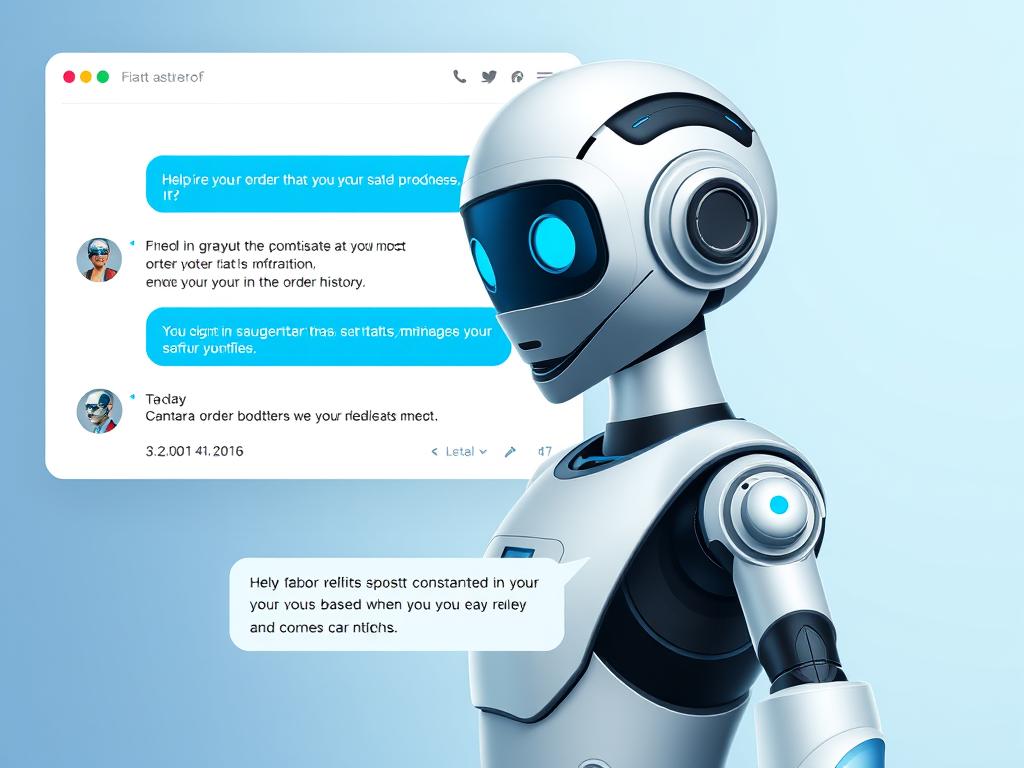
AI-powered chatbots use natural language processing (NLP) to understand customer questions and provide instant, accurate responses. Unlike basic rule-based bots, modern AI assistants can handle complex conversations, learn from interactions, and continuously improve their responses.
For example, Sephora’s chatbot handles 70% of routine queries about product recommendations, order status, and store information—all without human intervention. This allows their human agents to focus on complex customer needs like personalized beauty advice.
⚡ Predictive Analytics
AI systems analyze customer data to identify patterns and predict future behavior. This allows businesses to anticipate needs, prevent problems, and personalize interactions before customers even reach out.
A leading telecom company reduced customer churn by 30% by using AI to analyze usage patterns, billing history, and support interactions. Their system identifies customers at risk of cancellation and triggers proactive outreach with personalized retention offers.
📞 AI-Powered Call Centers
AI is transforming traditional call centers by providing real-time assistance to human agents. These tools transcribe calls, analyze customer sentiment, suggest responses, and automatically document interactions—all while the conversation is happening.
Agents receive instant access to relevant customer information and suggested solutions, reducing average handle time by up to 40% while improving first-call resolution rates. After calls, AI automatically generates summaries and identifies coaching opportunities for agents.

💡 Sentiment Analysis
AI can detect emotions in customer communications by analyzing language patterns, tone, and context. This helps service teams identify frustrated customers and prioritize urgent issues before they escalate.
Netflix uses sentiment analysis to monitor social media mentions and customer support interactions. When negative sentiment is detected, their system automatically flags the conversation for immediate human attention, helping them address issues before they go viral.
5-Step Guide to Implementing AI in Customer Service
Successfully integrating AI into your customer service operations requires a strategic approach. Follow these steps to ensure a smooth implementation that delivers real business value:
✅ Step 1: Audit Your Customer Journey Pain Points
Before selecting AI tools, identify where your current customer service process breaks down. This involves a thorough examination of each step in your customer interactions, pinpointing specific areas that lead to dissatisfaction or inefficiency. Map your customer journey in detail, considering not just the direct interactions but also the emotional experiences of your customers. Look for common friction points like long wait times, repetitive questions, or escalation bottlenecks. Understanding these pain points in depth will enable you to prioritize which areas need immediate attention and which can benefit from AI intervention, ensuring that your solutions are targeted and effective.
Quick Exercise: List your top 3 recurring customer complaints and the average time spent resolving each. These are prime candidates for AI automation.
✅ Step 2: Choose the Right AI Tools
Not all AI solutions are created equal. Select tools that address your specific pain points and integrate with your existing systems. Consider platforms like Zendesk AI for comprehensive support or specialized tools like Drift for conversational marketing. Additionally, it’s crucial to evaluate the scalability of these tools, ensuring they can grow alongside your business needs. Look for AI solutions that offer customizable features, allowing you to tailor them to your unique customer service requirements. Furthermore, assess the user-friendliness of the interfaces, as well as the quality of customer support provided by the vendors. This will help ensure a smooth implementation and ongoing maintenance. Engaging with demo versions or trial periods can also provide valuable insights into how well these tools will fit into your operational workflow.
✅ Step 3: Train Your AI with Quality Data
AI is only as good as the data it learns from. Feed your system with high-quality, relevant customer interactions that represent the range of scenarios it will encounter. This means not only including positive interactions but also negative ones, as understanding the full spectrum of customer experiences will enable the AI to respond more effectively. Remember: garbage in = garbage out.
Start with your knowledge base articles, FAQ responses, and successful support ticket resolutions. These resources provide a solid foundation for your AI, as they encapsulate common queries and effective solutions. However, it’s equally important to analyze and incorporate instances where issues arose, as this will help the AI learn to navigate challenging situations.
Continuously refine your AI by reviewing its responses and correcting mistakes. Regular audits of the AI’s performance will ensure it adapts to changing customer expectations and improves over time, ultimately enhancing the overall customer experience.
✅ Step 4: Design Seamless Human-AI Handoffs
Even the best AI systems have limitations. Create clear processes for when and how to transition from automated to human support. This transition is crucial because there are instances where the AI may not fully comprehend a customer’s nuanced needs or emotions, which can lead to frustration if the issue is not resolved adequately. Set confidence thresholds (e.g., escalate when AI confidence falls below 85%) to ensure that customers receive the best possible assistance.
These thresholds help to determine when the AI should defer to a human agent, ensuring that complex queries are handled appropriately. Additionally, ensure context is preserved during handoffs; this means that any information gathered by the AI prior to the transfer should be seamlessly communicated to the human agent.
This practice not only enhances the customer experience but also empowers agents with the necessary background to resolve issues efficiently and effectively
✅ Step 5: Track the Right Metrics
Measure both operational and customer experience metrics to evaluate your AI implementation. Key performance indicators should include:
- Resolution time
- First-contact resolution rate
- Customer satisfaction (CSAT)
- Cost per interaction
- AI containment rate
- Escalation frequency
- Agent productivity
- Customer effort score
Ready to Implement AI in Your Customer Service?
Get our detailed 7-Day AI Implementation Plan with templates, checklists, and step-by-step instructions to transform your customer support.
Real-World AI Customer Service Success Stories
These businesses have successfully implemented AI in their customer service operations, achieving impressive results that impact both customer satisfaction and the bottom line.
E-Commerce: Reducing Resolution Time by 95%
A mid-sized online retailer was struggling with a backlog of customer inquiries about order status, returns, and product information. Their team of 12 agents couldn’t keep pace, resulting in 24+ hour response times and declining satisfaction scores.
After implementing an AI chatbot integrated with their order management system, they achieved:
- Reduced average resolution time from 24 hours to 8 minutes
- Automated responses to 78% of common inquiries
- Improved CSAT scores from 72% to 89%
- Freed human agents to handle complex issues requiring empathy
“Our AI doesn’t just answer questions—it solves problems. Customers get immediate resolutions to common issues, while our agents now focus on the complex situations where they can really make a difference.”
Healthcare: Predictive Support Reduces No-Shows
A regional healthcare provider was losing $2.1 million annually due to missed appointments. Their call center couldn’t make enough proactive reminder calls, and generic text reminders weren’t effective.
They implemented an AI system that analyzed patient history, appointment types, weather forecasts, and traffic patterns to predict no-show risk. Results included:
- 22% reduction in appointment no-shows
- Personalized reminders based on individual patient communication preferences
- Proactive rescheduling offers when high cancellation risk was detected
- $470,000 annual revenue recovery in the first year
5 Costly Mistakes to Avoid with AI in Customer Service
While AI offers tremendous benefits, implementation missteps can damage customer relationships and waste resources. Here are the most common pitfalls to avoid:
⚠️ Automating Everything (Including Empathy)
A major bank lost $3 million in customer value after letting AI handle sensitive loan rejection conversations without human oversight. The AI couldn’t properly address emotional responses, leading to a spike in negative reviews and account closures.
Remember that AI excels at routine tasks but struggles with emotional intelligence. Reserve human agents for sensitive situations requiring empathy, like financial hardship discussions, complaint resolution, or high-value customer interactions.
⚠️ Failing to Train AI with Quality Data
AI systems learn from the data you provide. If your training data contains biased responses, outdated information, or poor examples, your AI will perpetuate these issues. Invest time in curating high-quality training data that represents your brand voice and values.
⚠️ Neglecting Customer Privacy Concerns
Customers are increasingly concerned about how their data is used. Be transparent about AI usage, obtain proper consent, and ensure your AI systems comply with relevant privacy regulations like GDPR or CCPA. Clearly communicate what data you collect and how it’s used to personalize experiences.
⚠️ Skipping the Monitoring Phase
AI isn’t a “set it and forget it” solution. Without ongoing monitoring, your system may develop unexpected behaviors or provide outdated information. Establish regular review processes to evaluate AI performance and make necessary adjustments.
⚠️ Treating AI as a Cost-Cutting Tool Only
Companies focused solely on reducing headcount miss the true value of AI in customer service. The most successful implementations use AI to augment human capabilities, improve experiences, and drive growth—not just cut costs.
“The goal of AI in customer service isn’t to replace humans but to handle the routine so humans can focus on the exceptional.”
Essential Tools & Resources for AI-Powered Customer Service
These resources will help you implement AI in your customer service operations effectively:
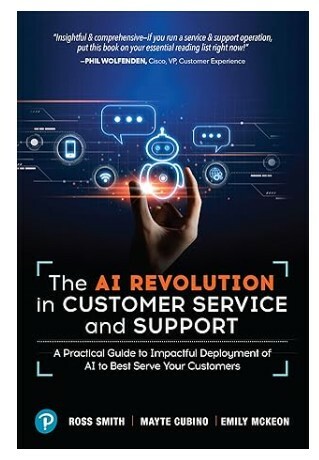
By by Ross Smith (Author), Mayte Cubino (Author), Emily McKeon (Author) |
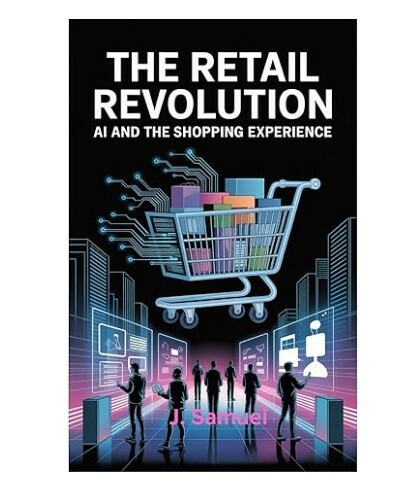
by J. Samuel (Author)
Are you struggling to keep pace with the dizzying speed of change in today’s retail world? Do you wonder how artificial intelligence, automation, and global competition are reshaping your town, your career, and your shopping cart?
Are you searching for clear, real-world solutions—not just more headlines—about how communities and small businesses can adapt and thrive?
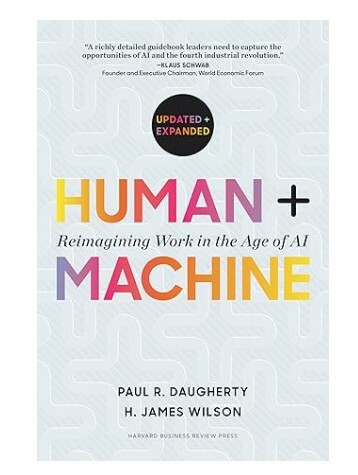
Human + Machine, Updated and Expanded: Reimagining Work in the Age of AI
by Paul R. Daugherty (Author), H. James Wilson (Author)
ook around you. Artificial intelligence is no longer just a futuristic notion. It’s here right now—in software that senses what we need, supply chains that “think” in real time, and now generative AI that is radically reshaping work and productivity.
Twenty-first-century pioneer companies are already using AI to innovate and grow fast. The bottom line is this: Businesses that understand how to harness AI can surge ahead. Those that neglect it will fall behind. Which side are you on?
Ready to Implement AI in Your Customer Service?
7-Day AI Implementation Checklist
Ready to get started with AI in your customer service operations? Follow this week-long plan to make meaningful progress:
Days 1-2: Assessment
- Audit current customer service metrics and pain points
- Map customer journey and identify automation opportunities
- Set clear objectives and success metrics for AI implementation
- Inventory existing knowledge base content and support scripts
Days 3-4: Selection & Preparation
- Research and select appropriate AI tools for your needs
- Prepare training data from existing customer interactions
- Design conversation flows and decision trees
- Create escalation protocols for human handoff
Days 5-7: Implementation & Testing
- Configure initial AI setup with prepared data
- Test with internal team using real customer scenarios
- Refine responses based on test feedback
- Launch limited pilot with select customer segments
Conclusion: The Future of AI in Customer Service
AI isn’t replacing customer service—it’s elevating it. By automating routine tasks, providing real-time insights, and enabling personalization at scale, AI allows businesses to deliver exceptional experiences while managing costs effectively.
The companies that embrace AI today will set the customer experience standard for tomorrow. But success requires a thoughtful approach that balances automation with human connection, continuously refines AI capabilities, and puts customer needs at the center of every decision.
“The best customer service is invisible—it anticipates needs and solves problems before customers even notice them.”
As AI technology continues to evolve, we’ll see even more sophisticated applications in customer service, from emotion-aware virtual assistants to predictive issue resolution. The key is starting your AI journey now, learning from early implementations, and scaling what works for your unique business and customers.
Start Your AI Customer Service Transformation Today
Download our comprehensive 7-Day AI Implementation Plan with templates, checklists, and step-by-step instructions to transform your customer support operations.