

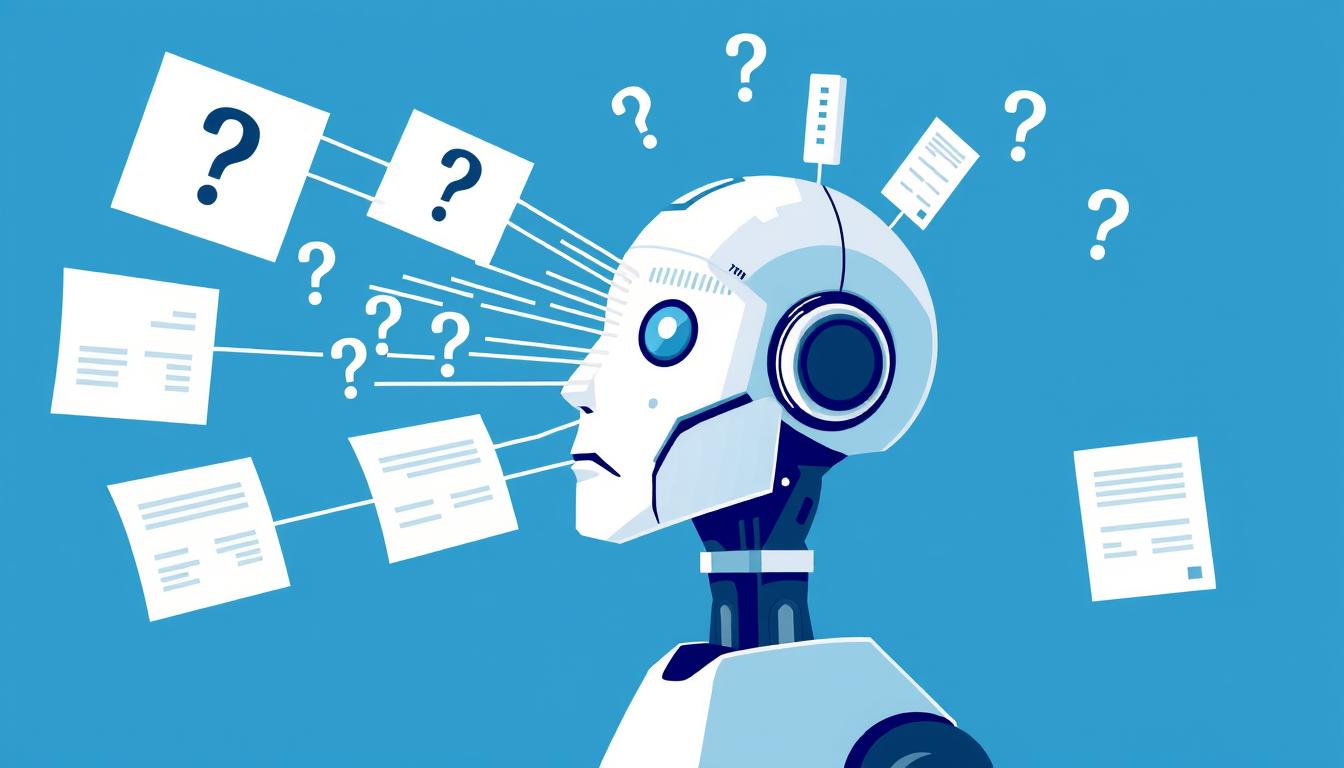
What Are AI Hallucinations?
AI hallucination is a phenomenon where artificial intelligence systems, particularly large language models and generative AI tools, produce outputs that are nonsensical, fabricated, or completely inaccurate while presenting them as factual. Unlike humans who typically know when they’re making something up, AI doesn’t “lie”—it improvises when it runs out of reliable data patterns.
💡 “AI hallucinations are like confident guesses without the facts—the system fills in gaps with what seems plausible based on patterns it’s seen, not what’s actually true.”
These hallucinations differ from bias or simple errors. Bias occurs when AI reflects prejudices in its training data, while errors might be simple miscalculations. Hallucinations, however, involve the AI creating entirely new, fabricated information that appears authentic but has no basis in reality.
⚠️ Reality Check: When Google’s Bard chatbot incorrectly claimed that the James Webb Space Telescope took the first images of planets outside our solar system, it demonstrated a classic hallucination—confidently stating false information as fact.
Why AI Hallucinates
Understanding why AI systems hallucinate helps us develop better strategies to prevent these issues. Several key factors contribute to this phenomenon:
Data Gaps and Training Limitations
AI models can only learn from the data they’re trained on. When faced with questions about topics underrepresented in their training data, they attempt to generate plausible responses based on similar patterns rather than admitting ignorance.
Pattern Recognition Without Understanding
Large language models excel at recognizing patterns in text but lack true comprehension. They predict what words should come next based on statistical patterns without grasping meaning or verifying factual accuracy.
Prompt Ambiguity
Vague or ambiguous prompts force AI to make assumptions about what information is being requested. Without clear constraints, the model may generate creative but incorrect outputs to fill perceived gaps.
Pressure to Produce Answers
Most AI systems are designed to always provide a response rather than saying “I don’t know.” This design choice prioritizes helpfulness over accuracy, leading to fabricated answers when the system lacks sufficient information.
🔍 Technical Factors
- Overfitting to training data
- Lack of real-time fact verification
- Probabilistic text generation
- Transformer architecture limitations
🧠 Cognitive Factors
- No conceptual understanding
- Inability to verify own outputs
- No episodic memory
- Context window limitations
Risks & Real-World Impact
AI hallucinations aren’t just theoretical concerns—they pose significant risks across various domains:
⚠️ Critical Risk Areas
AI hallucinations can have serious consequences in high-stakes environments where accuracy is essential:
Legal Field
AI-generated false legal precedents and citations can lead to invalid arguments, malpractice claims, and undermined court proceedings.
Healthcare
Fabricated medical information could result in improper treatment recommendations, misdiagnosis, or dangerous medication advice.
Business Intelligence
False market data or competitor analysis can lead to misguided strategic decisions and significant financial losses.

Trust Erosion
When AI systems consistently produce hallucinated content, user trust deteriorates rapidly. This trust deficit can undermine adoption of AI technologies across organizations and industries, slowing digital transformation efforts.
Legal and Ethical Implications
Organizations relying on AI-generated content may face liability issues if that content contains hallucinations that lead to harm. As AI regulation increases globally, companies must ensure their AI systems produce reliable, accurate information.
How to Detect and Prevent AI Hallucinations
While AI hallucinations can’t be completely eliminated with current technology, several strategies can help minimize their occurrence and impact:
✅ Verification Strategies
Always verify AI-generated information, especially for critical applications:
- Cross-reference AI outputs with reliable sources like academic journals, official documentation, or expert knowledge.
- Implement fact-checking protocols for all AI-generated content before publication or use in decision-making.
- Use multiple AI models to generate the same information and compare results to identify inconsistencies.
- Maintain human oversight for critical applications, with subject matter experts reviewing AI outputs.
✅ Prompt Engineering Techniques
The way you interact with AI significantly impacts the reliability of its responses:
How can I write better prompts to reduce hallucinations?
- Be specific and detailed in your requests
- Break complex questions into smaller, more manageable parts
- Ask the AI to “think step by step” or explain its reasoning
- Explicitly request that the AI indicate when it’s uncertain
- Provide context and background information in your prompt
✅ Technical Approaches
Several technical strategies can help reduce hallucinations in AI systems:
Model Selection and Configuration
- Use models with retrieval-augmented generation (RAG) capabilities
- Adjust temperature settings (lower = more conservative outputs)
- Implement domain-specific fine-tuning for specialized applications
System Design
- Build in source citation requirements
- Implement confidence scoring for generated content
- Create guardrails that prevent responses in areas of low confidence
AI Hallucinations in Action: Real-World Examples
Potential Benefits of AI
- Increased productivity and efficiency
- Creative idea generation
- Data analysis and pattern recognition
- Automation of repetitive tasks
Risks of AI Hallucinations
- Misinformation spread
- Legal liability from false information
- Damaged reputation and trust
- Poor business decisions based on fabricated data
Case Study: Legal Consequences
In the Mata v. A. Inc case, a lawyer used ChatGPT to research legal precedents. The AI hallucinated six non-existent cases, complete with fabricated citations, quotes, and claims that they were available in legal databases. The judge discovered the deception, and the attorney faced sanctions for submitting false information to the court.

Case Study: Corporate Communications
A major technology company used AI to draft a product specification document that included hallucinated technical capabilities. The marketing team, unaware of the fabrications, promoted these non-existent features to customers, resulting in significant backlash when the product launched without the promised functionality.
Prevention Strategy: Both cases could have been prevented through simple verification protocols. For legal research, cross-checking citations with official legal databases would have revealed the fabrications. For product specifications, having technical experts review AI-generated content before publication would have identified the hallucinated features.
Tools & Resources for AI Reliability
Several tools and approaches can help you manage AI hallucinations and improve overall reliability:
| Tool Category | Purpose | Example Solutions | Best For |
| Fact-Checking Extensions | Verify AI-generated content against reliable sources | WebGPT, Bing AI with citations, Perplexity AI | Content creators, researchers |
| Prompt Frameworks | Structure inputs to reduce hallucination risk | Chain-of-Thought, ReAct, Tree of Thoughts | AI engineers, prompt designers |
| RAG Systems | Ground AI responses in verified documents | LangChain, LlamaIndex, Pinecone | Developers, enterprise AI |
| Governance Platforms | Monitor and manage AI outputs across organization | IBM watsonx.governance, Microsoft Azure AI | Enterprise organizations |

Recommended Books & Resources
Deepen your understanding of AI hallucinations and develop effective strategies with these expert resources:

Mastering Hallucination Control in LLMs: Techniques for Verification, Grounding, and Reliable AI Responses
Price: $22.99
This book is a comprehensive guide to tackling one of the most urgent problems in AI: hallucinations. It explains why LLMs produce false outputs, what risks those errors pose, and, most importantly, how to design systems that verify, ground, and deliver reliable responses.
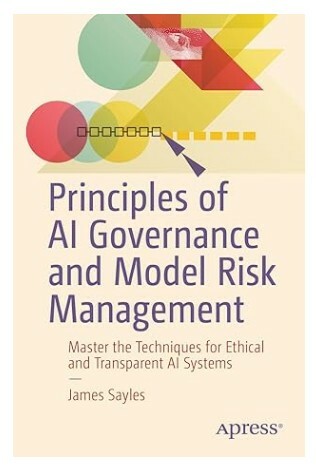
Principles of AI Governance and Model Risk Management
Price: $55.95
“Essential frameworks for implementing AI governance and preventing hallucination risks in enterprise settings.”
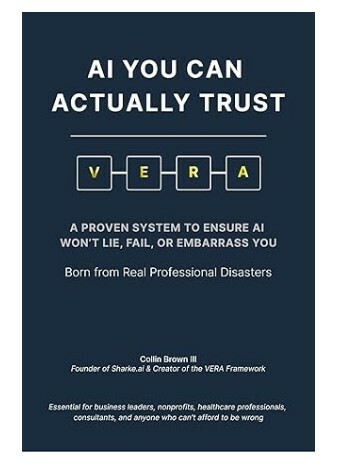
AI YOU CAN ACTUALLY TRUST: A PROVEN SYSTEM TO ENSURE AI WON’T LIE, FAIL, OR EMBARRASS YOU
Price: $9.99
“Practical methods for implementing verification protocols in AI workflows to catch hallucinations before they cause problems.”
AI Hallucination Management Checklist
Use this comprehensive checklist to minimize the risk of AI hallucinations in your organization:
- Understand the basics: Recognize what hallucinations are and why they occur
- Implement verification protocols: Always verify AI-generated information with reliable sources
- Use precise prompts: Craft clear, specific instructions that reduce ambiguity
- Select appropriate models: Choose AI systems with RAG capabilities for fact-based tasks
- Adjust model parameters: Lower temperature settings for more conservative outputs
- Maintain human oversight: Keep humans in the loop, especially for critical applications
- Document limitations: Clearly communicate the potential for hallucinations to all users
- Train users: Educate your team on detecting and responding to potential hallucinations
- Stay updated: Follow developments in AI reliability research and tools

Conclusion
AI hallucinations represent one of the most significant challenges in the deployment of generative AI systems. While they can’t be completely eliminated with current technology, understanding their causes and implementing robust verification strategies can significantly reduce their impact.
💡 “AI doesn’t replace human judgment—it depends on it. The future belongs to those who learn to partner with AI intelligently, not blindly.”
As AI continues to evolve, the responsibility falls on us—developers, users, and organizations—to implement the necessary safeguards that ensure these powerful tools enhance rather than undermine our work. By staying informed, implementing verification protocols, and maintaining appropriate human oversight, we can harness the benefits of AI while minimizing the risks of hallucinations.
This article includes affiliate links. If you purchase products through these links, we may earn a small commission at no additional cost to you.