


As technology gets better, everyone wonders: How do machines learn from data? The answer is in the complex world of machine learning algorithms. These algorithms are key to artificial intelligence. They help machines predict, classify, and decide.
It’s very important to understand algorithms of machine learning. As AI changes industries, knowing these basics is key for new ideas and staying current.
Key Takeaways
- Machine learning algorithms are the driving force behind AI innovation.
- Understanding these algorithms is crucial for making informed decisions.
- The applications of machine learning are vast and varied.
- Staying ahead of the curve requires a deep understanding of machine learning fundamentals.
- The future of AI is closely tied to the development of more sophisticated algorithms.
The Power and Promise of Machine Learning Algorithms

Machine learning algorithms have a huge impact on our world today. As more industries use AI and machine learning, the need for advanced algorithms grows fast.
Thought-Provoking Questions About Machine Learning
What’s next for machine learning? Will algorithms keep getting better at making decisions? How will they change fields like healthcare and finance?
Key Statistics Highlighting the Growth of Machine Learning
Machine learning is growing fast, with the global market set to grow a lot.
| Year | Market Size | Growth Rate |
|---|---|---|
| 2020 | $8.4B | 34.4% |
| 2021 | $11.3B | 35.1% |
| 2022 | $15.4B | 36.3% |
Popular machine learning algorithms are fueling this growth. They help businesses use data to gain valuable insights.
Understanding the Fundamentals of Algorithms of Machine Learning

Learning about machine learning algorithms is key for using them in many fields. This includes healthcare and finance. These algorithms are more than just math; they power the AI changing our world.
What Defines a Machine Learning Algorithm?
A machine learning algorithm helps machines learn from data and make decisions on their own. Algorithmic approaches in machine learning fall into two main types: supervised and unsupervised. Each type has its own role, with supervised learning relying on labeled datasets to guide the learning process, while unsupervised learning works with unlabeled data to identify patterns and groupings. This distinction is crucial as it influences how the algorithms interpret data and the types of problems they can solve.
How Algorithms Enable Machines to Learn
Algorithms let machines learn by working with data through math models. They are trained on data, then adjust to fit it. This training involves feeding the algorithm a substantial amount of data, allowing it to recognize patterns and correlations. After that, they can predict or decide on new data, applying the insights gained during training to make informed decisions in real-world scenarios. This iterative process not only enhances the accuracy of predictions but also enables the algorithms to improve over time as they are exposed to more data.
The Relationship Between Data, Algorithms, and Intelligence
Data, algorithms, and intelligence are closely linked in machine learning. Good data is needed for algorithms to work well. This leads to smart systems that can handle tough tasks.
| Component | Role in Machine Learning | Example |
|---|---|---|
| Data | Foundation for training algorithms | Images for image recognition |
| Algorithms | Process data to enable learning | Supervised learning algorithms like regression |
| Intelligence | Outcome of effective data and algorithms | Predictive maintenance in manufacturing |
Major Types of Machine Learning Algorithms

It’s key to know the different machine learning algorithms to use them right. These algorithms are grouped by how they learn and what they do.
Supervised Learning Algorithms
Supervised learning uses labeled data, where the right answer is given. This approach allows algorithms to learn from the data and make predictions based on it. It’s split into:
Classification AlgorithmsClassification Algorithms
Classification sorts data into clear groups based on specific features or characteristics. For example, spam vs. not spam emails or product recommendation systems. In classification tasks, the algorithm is trained on a dataset where each instance is labeled with the correct category. You’ll find Logistic Regression, Decision Trees, and Support Vector Machines (SVMs) here. Each of these algorithms has its strengths; for instance, Decision Trees can handle both numerical and categorical data, while SVMs are effective in high-dimensional spaces.
Regression Algorithms
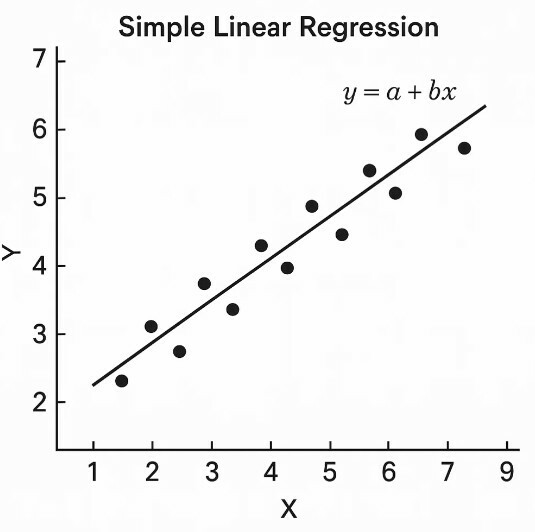
Regression predicts numbers and is essential for tasks requiring continuous output. Think of it like forecasting or analyzing trends over time. Linear Regression and Polynomial Regression are common here. Linear Regression finds the best-fit line through data points, while Polynomial Regression can model more complex relationships by fitting a polynomial equation. Both methods are widely used in various fields, including finance for predicting stock prices and in real estate for estimating property values.
Unsupervised Learning Algorithms
Unsupervised learning works with data without labels, finding patterns. It’s split into:
Clustering Algorithms
Clustering groups similar data together based on their features, allowing for the identification of inherent structures within the data. K-Means Clustering is a top choice for this, utilized in many areas like customer segmentation, where businesses can identify distinct customer groups based on purchasing behavior, and in gene studies, where it helps in categorizing genes with similar expression patterns. Other popular clustering methods include Hierarchical Clustering and DBSCAN, each with its unique approach to grouping data points and handling different data distributions.
Association Algorithms
Association finds rules between variables, revealing interesting relationships within datasets. The Apriori algorithm is a big name here, used in market studies to uncover associations between products that are frequently bought together, which can inform marketing strategies and inventory management. Additionally, the Eclat and FP-Growth algorithms offer alternative methods for association rule mining, focusing on efficiency and scalability when dealing with large datasets. Understanding these algorithms is crucial for leveraging data effectively in various applications.
Reinforcement Learning Algorithms
Reinforcement learning learns by trying and failing, interacting with its environment. It’s used in robotics, games, and self-driving cars. This type of learning involves an agent that makes decisions based on the current state of its environment, receiving feedback in the form of rewards or penalties. Over time, the agent learns to optimize its actions to maximize cumulative rewards, which makes it particularly effective for tasks that require a sequence of decisions. Applications extend beyond traditional fields, with reinforcement learning also finding use in areas like finance for algorithmic trading and healthcare for personalized treatment plans.
Ensemble Learning Algorithms
Ensemble learning mixes models to get better predictions. Bagging, Boosting, and Stacking are methods to boost model performance. By combining the strengths of multiple models, ensemble methods can reduce variance and bias, leading to more robust predictions. For instance, Bagging helps in improving the stability of machine learning algorithms by training multiple models on different subsets of the data, while Boosting focuses on correcting the errors made by previous models in the sequence. Stacking, on the other hand, combines predictions from various models to produce a final output, which can often outperform individual models. These techniques are crucial in competitions and real-world applications where accuracy is paramount.
Knowing these main types of machine learning algorithms helps pick the best one for a task. This makes machine learning projects more effective.
Deep Dive into Popular Machine Learning Algorithms

Choosing the right machine learning algorithm is key. Each algorithm is best for different tasks and data. We’ll look at some top algorithms, their strengths, weaknesses, and how they’re used in the world.
Linear Regression and Logistic Regression
Linear regression predicts continuous outcomes, making it a fundamental tool in statistical modeling. It operates by establishing a relationship between independent variables and a dependent variable, allowing for the estimation of future values based on past data trends.
Logistic regression, on the other hand, is specifically designed for binary classification, where the output is limited to two possible outcomes, such as yes/no or true/false. Both algorithms are widely used in many fields for forecasting and making decisions, such as in economics for predicting sales trends or in healthcare for determining patient risk factors.
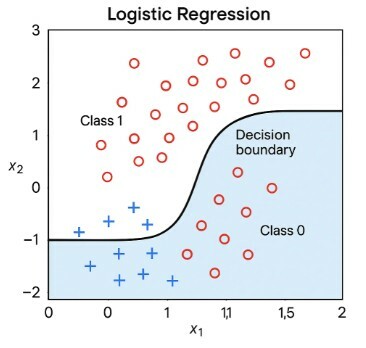
Real-world Application: In finance, linear regression predicts stock prices. Logistic regression checks credit risk.
Decision Trees and Random Forests
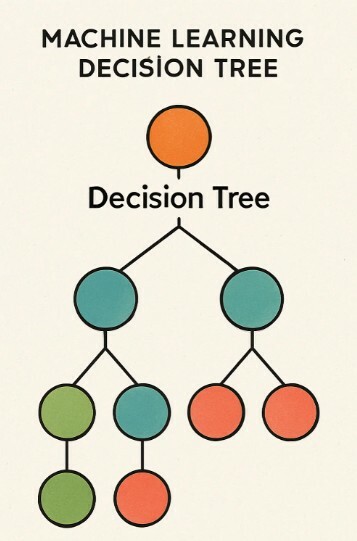
Decision trees split data based on feature values, creating a model that is easy to interpret and visualize. Each node in the tree represents a decision point, where the data is divided according to specific criteria, leading to various branches that culminate in outcomes. This approach allows for clear decision-making processes.
However, decision trees can be prone to overfitting, especially when they become too complex, capturing noise in the data rather than the underlying pattern.
Random forests, being a group of decision trees, mitigate this issue by averaging the predictions from multiple trees, which reduces variance and enhances the overall accuracy and reliability of the predictions. This ensemble method also provides a more robust model that can generalize better to unseen data, making it a powerful tool in various applications.
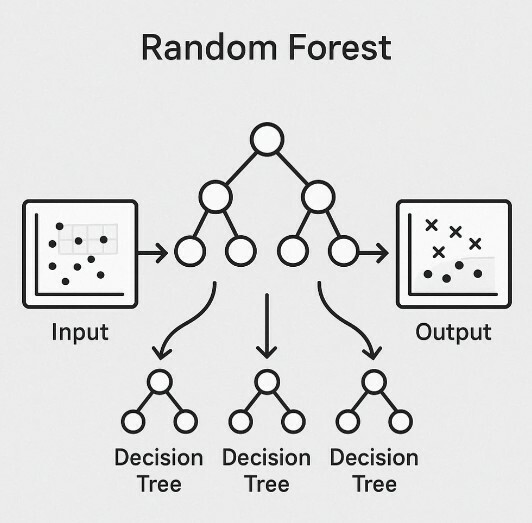
Real-world Application: In healthcare, decision trees help diagnose diseases. Random forests predict patient outcomes.
Support Vector Machines (SVMs)
SVMs are great for classification and regression, especially with high-dimensional data.
Real-world Application: SVMs classify images in image recognition.
Neural Networks and Deep Learning
Neural networks mimic the brain, with layers of nodes. Deep learning, a part of neural networks, has led to top results in many areas.
Real-world Application: In self-driving cars, deep learning detects objects and understands scenes.
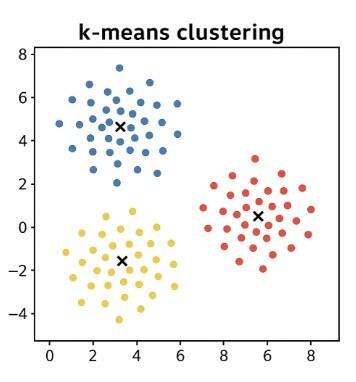
K-means clustering groups similar data into clusters without supervision.
Real-world Application: In marketing, k-means clusters customers by behavior and preferences.
Naive Bayes and Gradient Boosting
Naive Bayes is simple yet effective for classification, relying on the principle of conditional probability. It assumes that the presence of a particular feature in a class is independent of the presence of any other feature. This makes it computationally efficient, especially for large datasets, and allows it to perform well even with limited training data. Gradient boosting, on the other hand, combines weak models into a strong one by sequentially adding predictors that correct the errors made by previous models. This method enhances predictive accuracy significantly and is particularly effective in handling complex datasets with intricate patterns.
Knowing these algorithms is key for real-world use. By using their strengths and avoiding weaknesses, we can build strong models. These models can drive business growth and innovation.
Real-World Applications of Machine Learning Algorithms

Machine learning algorithms are changing how businesses work. They are used in many ways to solve big problems, make things more efficient, and help make better decisions.
Healthcare and Medical Diagnosis
In healthcare, machine learning algorithms help with medical diagnosis and treatment plans. For example, they can look at medical images to find problems like tumors faster than doctors can.
“Machine learning algorithms can help doctors identify high-risk patients and provide targeted interventions, improving patient care and outcomes.”
Financial Services and Fraud Detection
In finance, machine learning algorithms are used to spot fraud and manage risks. They look through lots of data to find signs of fraud.
| Industry | Application | Benefit |
|---|---|---|
| Healthcare | Medical Diagnosis | Improved Accuracy |
| Finance | Fraud Detection | Enhanced Security |
| E-commerce | Recommendation Systems | Personalized Experience |
E-commerce and Recommendation Systems
E-commerce sites use machine learning algorithms for recommendations. They suggest products based on what you’ve looked at and bought.
Autonomous Vehicles and Computer Vision
In cars, machine learning algorithms are key for self-driving cars. They help the cars understand what’s happening around them and make choices.
Natural Language Processing Applications
Machine learning algorithms also help with understanding and using language. They’re used for things like translating languages, figuring out how people feel, and summarizing texts.
As algorithms of machine learning get better, they will be used in even more areas. This will lead to more innovation and better ways of doing things.
Top 5 Books on Machine Learning Algorithms from Amazon

Looking to explore machine learning algorithms? Here are the top 5 books on Amazon. They cover everything from the basics to advanced techniques and applications.
Hands-On Machine Learning with Scikit-Learn, Keras, and TensorFlow
This book is a hands-on guide to machine learning with Python libraries. It dives into different types of machine learning algorithms and how to use them. Key Topics Covered:
- Practical applications of machine learning
- Using Scikit-Learn, Keras, and TensorFlow for algorithmic approaches in machine learning
- Deep learning techniques
Pattern Recognition and Machine Learning
This book focuses on the theory of machine learning. It explores algorithmic approaches in machine learning and is great for those who want to understand the math behind it. Key Topics Covered
- Pattern recognition techniques
- Bayesian methods in machine learning
- Graphical models
The Hundred-Page Machine Learning Book
This book is a quick introduction to machine learning. It covers the basics and types of machine learning algorithms. It’s perfect for beginners. Key Topics Covered
- Basic concepts in machine learning
- Supervised and unsupervised learning
Machine Learning: A Probabilistic Perspective
This book gives a detailed overview of machine learning from a probabilistic standpoint. It’s great for those with a statistical background. Key Topics Covered
- Probabilistic models in machine learning
- Bayesian networks and inference
Deep Learning
This book explores deep learning techniques in depth. It’s essential for understanding modern machine learning. It covers both the theory and practice of deep neural networks. Key Topics Covered
- Deep neural networks
- Convolutional and recurrent networks
Conclusion: The Future of Algorithms in Machine Learning
Understanding machine learning algorithms is key to unlocking AI’s full potential. These algorithms let machines learn from data, spot patterns, and make smart choices. They are vital for driving innovation and progress in fields like healthcare and finance.
Deep learning algorithms have changed the game in computer vision and natural language processing. As research keeps moving forward, we’ll see even more advanced uses of machine learning. This could lead to big leaps in areas like self-driving cars and tailored medicine.
The future of machine learning looks bright, with chances for better explainability, transparency, and fairness. It’s important to keep up with the latest in machine learning. This will help drive progress and innovation in AI and tech.