
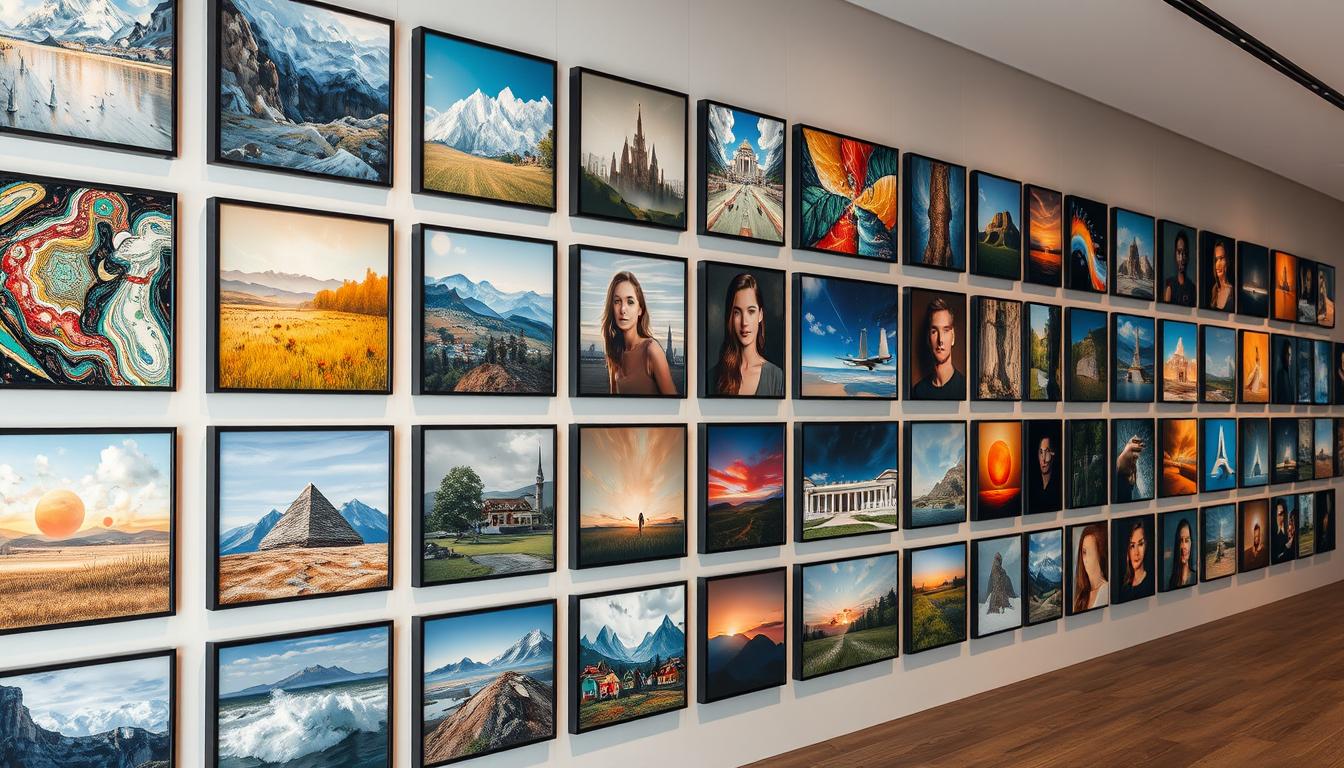
What Are Generative Adversarial Networks? 🤖
A Generative Adversarial Network (GAN) is a system made of two neural networks—the Generator and the Discriminator—that compete to make better and more realistic data. First introduced by Ian Goodfellow and his colleagues in 2014, GANs have transformed how machines create content by learning from existing examples.
Imagine an art student (the Generator) trying to paint fake masterpieces, and a teacher (the Discriminator) trying to spot which paintings are fake. The student continuously improves based on the teacher’s feedback, while the teacher gets better at detecting forgeries. Over time, both get incredibly good at their jobs—until the student creates paintings so convincing they’re indistinguishable from real masterpieces.
Unlike traditional neural networks that simply classify or recognize patterns, GANs can generate entirely new content that closely resembles real-world data. This ability has opened doors to applications that were once thought impossible for machines.
How GANs Work — The Duel of Intelligence ⚔️
The magic of GANs lies in their adversarial training process—a sophisticated duel between two neural networks that drives both to improve. Let’s break down how this remarkable system functions:
🎨 The Generator: The Creative Force
The generator is a deep neural network that takes random noise as input and transforms it into data that resembles real examples. Think of it as an artist starting with random brushstrokes and refining them into a coherent image. The generator’s goal is simple but challenging: create outputs so realistic that they fool the discriminator.
🔍 The Discriminator: The Critical Judge
The discriminator acts as a binary classifier that distinguishes between real data (from the training dataset) and fake data (created by the generator). It analyzes each input and outputs a probability score—1 for “real” and 0 for “fake.” The discriminator’s objective is to correctly identify the origin of every sample it receives.
⚔️ Adversarial Training: The Competitive Learning Process
During training, these networks engage in a zero-sum game where one’s gain is the other’s loss:
- The generator creates samples and tries to fool the discriminator
- The discriminator evaluates both real and generated samples
- The generator improves based on how well it fooled the discriminator
- The discriminator improves its ability to tell real from fake
- This cycle repeats thousands of times, with both networks getting progressively better
It’s an AI arms race—but instead of weapons, the battlefield is creativity itself. Through this continuous feedback loop, the generator learns to produce increasingly realistic data while the discriminator becomes more discerning. Eventually, the generator creates outputs that are virtually indistinguishable from real data.
“GANs are the most interesting idea in the last 10 years in machine learning.” — Yann LeCun, Facebook’s AI Research Director
Key Variants of GANs 🧩
Since their introduction, GANs have evolved into numerous specialized architectures, each designed to address specific challenges or applications. Here are the most influential variants:
🧩 Vanilla GANs
The original model introduced by Ian Goodfellow in 2014, using multi-layer perceptrons for both the generator and discriminator. While groundbreaking, vanilla GANs often face training stability issues and mode collapse (generating limited varieties of outputs).
🖼️ DCGAN
Deep Convolutional GANs replaced the simple networks with convolutional neural networks, dramatically improving image generation quality. DCGANs introduced architectural guidelines that made GANs more stable and became the foundation for many subsequent models.
🎧 CycleGAN
These networks excel at image-to-image translation without paired examples. CycleGANs can transform horses into zebras, summer scenes into winter, or photos into paintings—all without requiring before-and-after pairs during training.
🎬 StyleGAN
Developed by NVIDIA, StyleGAN generates incredibly photorealistic images with unprecedented control over style attributes. It powers websites like “This Person Does Not Exist,” creating human faces so realistic they’re indistinguishable from photographs.
📈 Conditional GANs
These GANs incorporate additional information (like class labels) to guide the generation process. Rather than generating random samples, conditional GANs can create specific types of outputs based on provided conditions.
⚡ Wasserstein GAN
WGANs use an alternative loss function that provides more stable training and addresses the mode collapse problem. They measure the Earth Mover’s distance between distributions, offering better theoretical guarantees.
Each variant represents a significant advancement in addressing the challenges of generative modeling, from training stability to output quality and control. These architectural innovations have expanded the practical applications of GANs across numerous domains.
Real-World Applications of GANs 💡
Generative Adversarial Networks have moved beyond research labs into practical applications that are transforming industries. Their ability to generate realistic data has opened new possibilities across multiple fields:
🎨 Creative Design and Art
GANs have revolutionized digital art creation, enabling new forms of creative expression. Artists collaborate with these AI systems to generate novel artworks, while designers use them to rapidly prototype concepts and explore new aesthetic directions.
📸 Deepfake & Media Production
GANs power sophisticated image and video synthesis, enabling everything from special effects in film to virtual try-on applications in e-commerce. While deepfakes raise ethical concerns, the same technology enables filmmakers to create aging effects, resurrect historical figures for educational content, or generate realistic backgrounds without expensive shoots.
🧬 Healthcare and Medical Imaging
In healthcare, GANs generate synthetic medical images for training diagnostic algorithms without compromising patient privacy. They can simulate rare conditions, enhance low-resolution scans, or even generate cross-modality images (converting MRI to CT scans). This accelerates research and improves diagnostic capabilities without requiring additional patient data.
🏭 Manufacturing and Product Design
Manufacturers use GANs to generate design variations, simulate product performance under different conditions, and create synthetic data for testing. This reduces the need for physical prototypes, accelerates the design cycle, and enables more thorough testing before production.
📊 Data Science and Machine Learning
GANs address one of the biggest challenges in machine learning: data scarcity. By generating synthetic but realistic training data, they help build more robust models in situations where collecting real data is expensive, dangerous, or impossible. This data augmentation technique has improved performance across numerous machine learning applications.
The Power and the Paradox of GANs ⚡
As with many transformative technologies, GANs present both extraordinary opportunities and significant challenges. Understanding this duality is essential for responsible development and application.
The Power 💪
- Democratizes creativity by making advanced content generation accessible
- Reduces costs for data collection and content creation
- Enables innovation in fields constrained by data limitations
- Creates new artistic possibilities and mediums
- Accelerates research through synthetic data generation
The Paradox ⚠️
- Challenges notions of authenticity and truth in digital media
- Raises concerns about consent when generating synthetic versions of real people
- Can perpetuate biases present in training data
- Potential for misuse in creating misleading content
- Blurs the line between human and machine creativity
“GANs are like fire: they can cook or they can burn. It depends on who’s holding the flame.”
The ethical implications of GANs extend beyond technical considerations. As these systems become more powerful and widespread, we must develop frameworks for responsible use that maximize benefits while mitigating potential harms. This includes transparency about AI-generated content, consent mechanisms for synthetic representations, and ongoing research into detecting manipulated media.
Step-by-Step Guide to Understanding GANs 🚀
Whether you’re a developer, researcher, or curious learner, here’s a practical pathway to understanding and working with Generative Adversarial Networks:
-
Learn the basics of neural networks and backpropagation
Before diving into GANs, ensure you understand fundamental concepts like neural network architecture, gradient descent, and backpropagation. These form the building blocks of more complex generative models.
-
Understand adversarial training through small experiments
Start with simple GAN implementations on basic datasets like MNIST (handwritten digits). This allows you to observe the training dynamics and understand how the generator and discriminator evolve together.
-
Try open-source GAN models (TensorFlow, PyTorch)
Experiment with established frameworks like TensorFlow or PyTorch, which offer pre-built components for creating GANs. Libraries like TF-GAN and PyTorch-GAN provide accessible starting points with documentation and examples.
-
Generate your first synthetic image using a pre-trained GAN
Before building your own models, experiment with pre-trained GANs like StyleGAN. This gives you immediate results and helps you understand what’s possible with current technology.
-
Explore ethics—understand responsible use in content and media
As you develop GAN applications, consider the ethical implications of synthetic content generation. Familiarize yourself with best practices for transparency, consent, and responsible deployment.
💡 Pro Tip: When training your first GAN, start with a simple architecture and small dataset. GANs are notoriously difficult to train, and beginning with complexity can lead to frustration. Gradually increase complexity as you gain experience with the training dynamics.
Real-Life Stories: GANs in Action 🌟
The true impact of Generative Adversarial Networks becomes clear when we see how they’re being applied in real-world scenarios. Here are three compelling examples of GANs transforming different fields:
Artists Collaborating with AI
In 2018, the artwork “Portrait of Edmond de Belamy” created by the Paris-based art collective Obvious using a GAN sold at Christie’s auction house for $432,500. This milestone represented the first time a major auction house sold AI-generated art. Since then, artists like Refik Anadol and Sofia Crespo have pioneered new aesthetic directions by collaborating with GANs, creating immersive data sculptures and nature-inspired artificial lifeforms that blur the boundary between human and machine creativity.
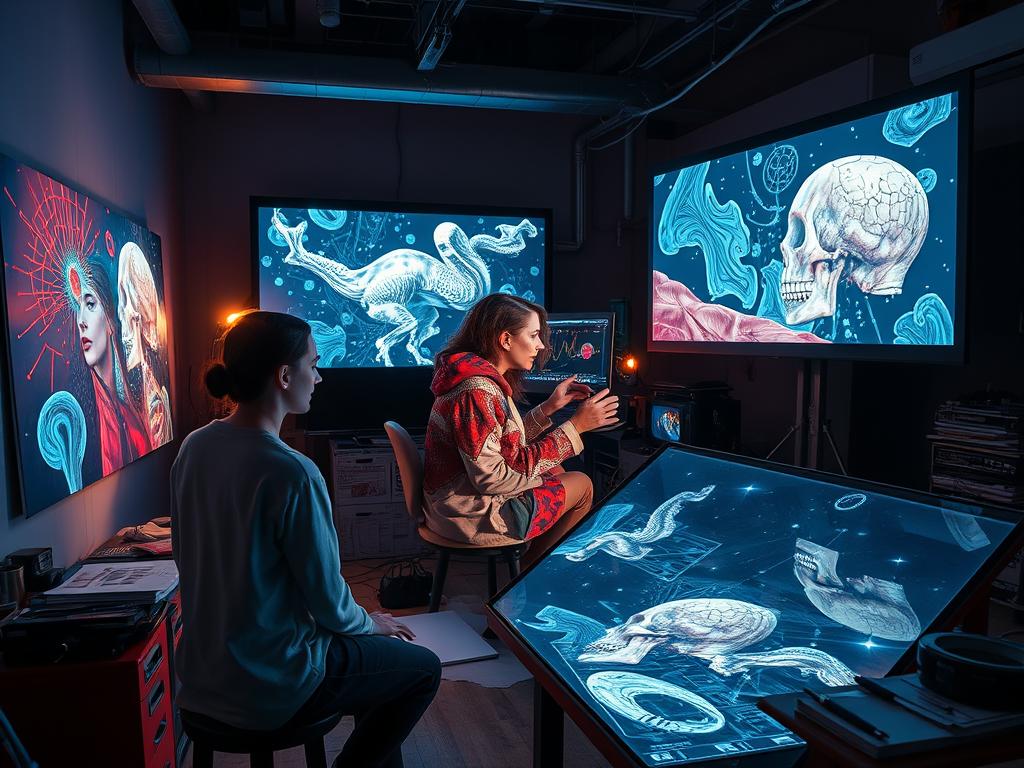
Medical Researchers Advancing Healthcare
At Massachusetts General Hospital, researchers developed a GAN system that generates synthetic brain MRI images of tumors. These synthetic images help train diagnostic algorithms without using real patient data, addressing both privacy concerns and the scarcity of examples for rare conditions. The GAN-generated images maintain the statistical properties of real tumors while being completely artificial, allowing researchers to create diverse training datasets that improve diagnostic accuracy for rare brain tumors by up to 30%.
Fashion Brands Reimagining Design
The fashion house Acne Studios collaborated with AI researchers to develop a GAN-based design system that generates new pattern and textile designs based on their historical collections. This system serves as a creative partner for their design team, suggesting novel directions while maintaining the brand’s distinctive aesthetic. The resulting “AI-augmented” collection received critical acclaim for its innovative patterns while remaining recognizably aligned with the brand’s identity.
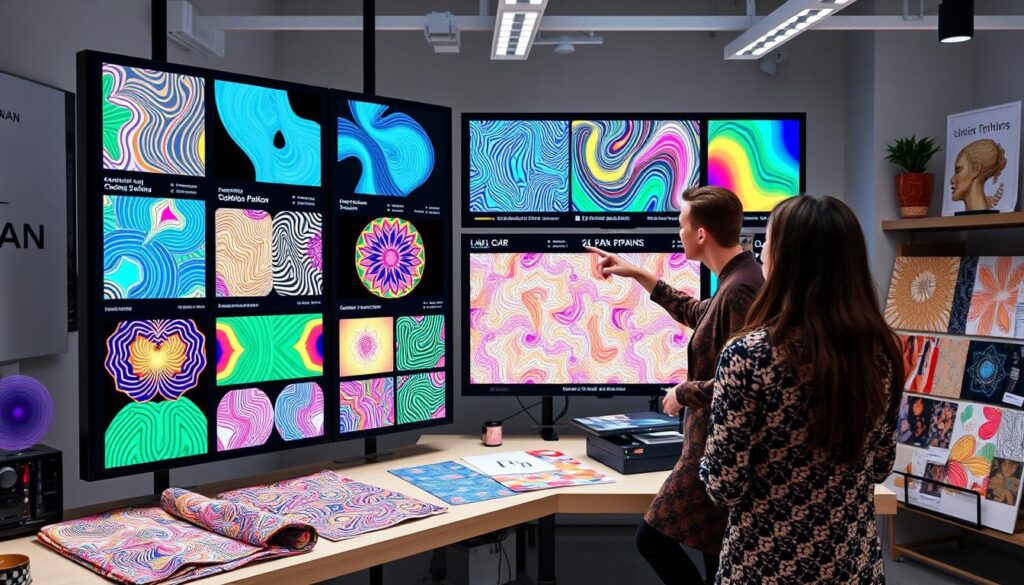
These examples demonstrate how GANs are not replacing human creativity and expertise but enhancing them—providing new tools, possibilities, and perspectives that wouldn’t be possible through traditional means alone.
Common Mistakes to Avoid When Working with GANs ⚠️
While Generative Adversarial Networks offer tremendous potential, they also present unique challenges. Here are critical pitfalls to avoid:
- Believing GANs are “creative” on their own — GANs don’t create from nothing; they remix and recombine patterns from their training data. Understanding this limitation helps set realistic expectations for what these systems can produce.
- Ignoring ethical implications and misinformation risks — The ability to generate realistic content carries responsibility. Consider the potential impacts of your GAN applications, especially regarding consent, representation, and the potential for misleading content.
- Using GANs without proper data governance — The quality and diversity of training data directly affects what GANs can generate. Insufficient attention to data curation often results in biased, limited, or problematic outputs.
- Overfitting models to small or biased datasets — GANs trained on limited data will generate limited variations. Ensure your training data is diverse and representative of the domain you’re modeling.
- Neglecting the challenges of GAN training — Issues like mode collapse (generating only a few types of outputs) and training instability require specific techniques to address. Don’t assume standard neural network training approaches will work without modification.
Important: When publishing or sharing GAN-generated content, always clearly disclose that it was AI-generated. Transparency builds trust and helps maintain ethical standards as these technologies become more widespread.
Essential Books

GANs in Action
By Jakub Langr and Vladimir Bok
Price: $39.99
A practical guide to implementing various GAN architectures with code examples and real-world applications.
“Perfect balance of theory and practical implementation. The code examples helped me build my first working GAN.” — Reader Review
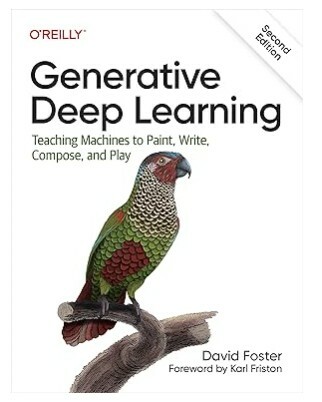
Generative Deep Learning
By David Foster
Price: $49.99
Comprehensive coverage of generative models including GANs, VAEs, and transformers with Python implementations.
“The explanations of complex concepts are remarkably clear. This book transformed my understanding of generative AI.” — Reader Review

Deep Learning with Python
By François Chollet
Price: $59.99
While not exclusively about GANs, this book provides essential deep learning foundations with a chapter dedicated to generative models.
“The perfect starting point before diving into specialized GAN resources. Chollet’s explanations are unmatched in clarity.” — Reader Review

Checklist Summary: Your GAN Journey 📋
As you explore and implement Generative Adversarial Networks, use this checklist to guide your progress:
- 🎨 Understand Generator-Discriminator dynamics — Master the fundamental adversarial relationship that powers GANs
- 🤖 Explore key GAN architectures — Experiment with DCGAN, CycleGAN, StyleGAN and other variants to find the right approach for your application
- 📊 Apply GANs in creative or data-driven projects — Move beyond tutorials to implement GANs in real-world scenarios
- ⚖️ Practice ethical awareness and transparency — Consider the implications of synthetic content and implement responsible practices
- 🚀 Experiment and share responsibly — Contribute to the community by sharing your learnings, code, and insights
Conclusion: The Future of Creative AI 💫
Generative Adversarial Networks taught machines to imagine—and challenged humans to rethink creativity itself. As we’ve explored throughout this article, GANs represent far more than just another machine learning technique; they embody a fundamental shift in how we understand artificial intelligence’s creative potential.
From generating photorealistic images and enhancing medical diagnostics to designing new products and creating art, GANs continue to push boundaries across disciplines. Their unique adversarial architecture—pitting two neural networks against each other in a continuous game of improvement—has proven remarkably effective at capturing the complex patterns and nuances of real-world data.
Yet perhaps the most profound impact of GANs lies not in what they can create, but in how they’ve transformed our relationship with technology. These systems challenge us to reconsider fundamental questions about creativity, authenticity, and the nature of human-machine collaboration.
The future of innovation may not lie in man or machine, but in how they collaborate to dream new realities together. As GANs and other generative models continue to evolve, they promise to become increasingly sophisticated partners in our creative and problem-solving endeavors.