

The traditional rigid 5-year plan is as outdated as paper maps in the age of GPS navigation. Today’s careers require a more adaptable approach—one that sets direction but recalculates when necessary, just like your favorite navigation app.
Why Flexibility Matters in Career Planning
Traditional career planning assumes a stable, predictable world. But today’s reality is far different. Industries transform overnight, technologies render skills obsolete, and personal priorities shift as we move through different life stages.
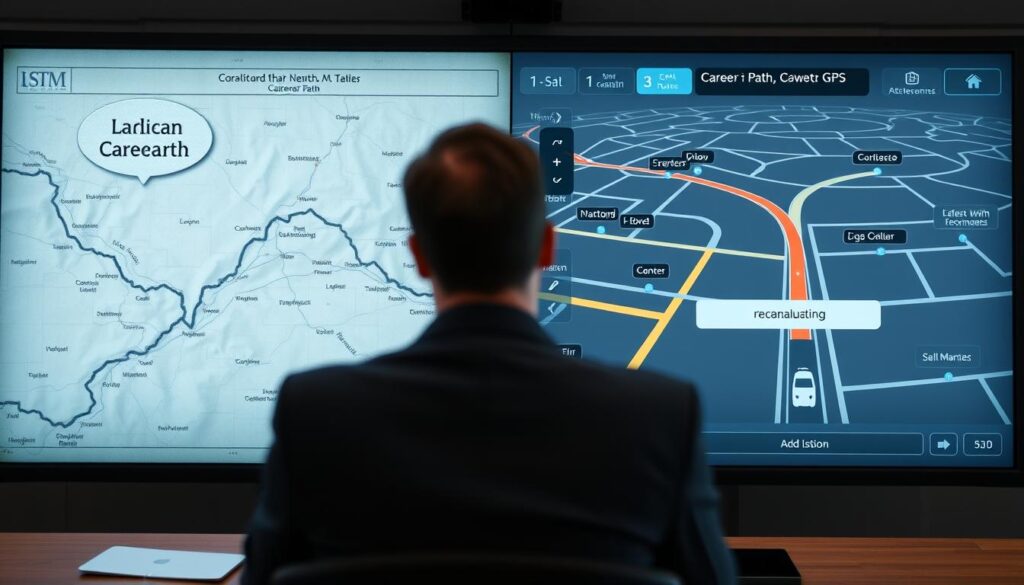
Consider how quickly artificial intelligence has transformed job requirements across industries. Or how the pandemic permanently altered work arrangements. A rigid 5-year plan created in 2019 would have been obsolete by 2020.
The most successful professionals today treat their career path more like Google Maps than a paper atlas. They set a destination but understand the route might change due to unexpected “traffic” or “road closures” in their industry.
The Career GPS Framework: Direction with Flexibility
Your Career GPS works much like navigation software. It knows your current location (skills and experience), your destination (career goals), and can calculate multiple routes to get there. Most importantly, it can recalculate when obstacles appear.
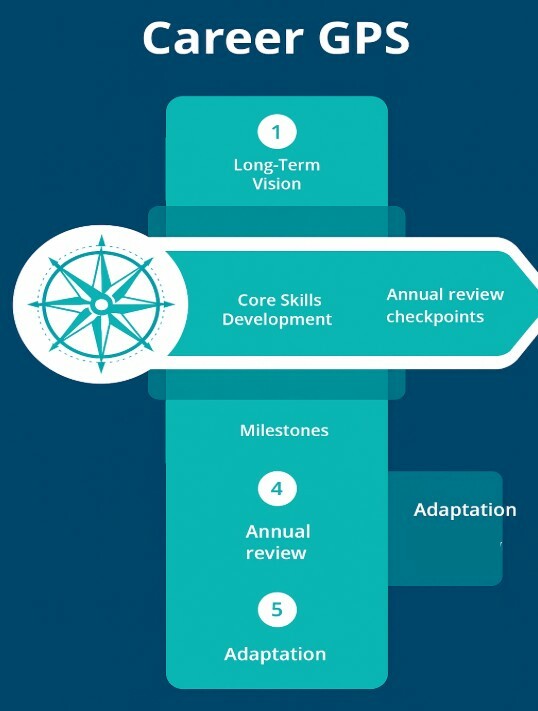
Here’s how to build your own Career GPS in five steps:
Step 1: Define Your Long-Term Vision
Start with the destination. Where do you want to be in 5 years? But instead of focusing solely on a specific job title (which might not exist in 5 years), define your vision in terms of:
- The impact you want to make
- The skills you want to master
- The work environment you want to be in
- The compensation level you aim to achieve
This broader vision gives you flexibility while maintaining direction.
Step 2: Identify 2-3 Core Skills to Develop
Research consistently shows that skills—not job titles—are the currency of career advancement. Identify 2-3 core skills that will remain valuable regardless of how your industry evolves.

These might include technical skills specific to your field, but should also incorporate transferable skills like data analysis, project management, or effective communication that remain valuable across roles and industries.
Step 3: Set Short-Term Milestones (6-12 Months)
While your destination is 5 years out, your GPS needs checkpoints along the way. Create specific, achievable milestones for the next 6-12 months that move you toward your vision.
These might include completing a certification, leading a specific project, or expanding your network in a targeted way. The key is making them concrete enough to act on immediately.
Step 4: Build in Review Checkpoints
Just as a GPS constantly monitors your location, your Career GPS needs regular review points. Schedule quarterly check-ins to assess your progress and annual deep reviews to evaluate if your destination still makes sense.
During these reviews, ask yourself: Are my milestones still moving me toward my vision? Has my industry changed in ways that affect my route? Have my personal priorities shifted?
Step 5: Adapt for Life and Market Changes
The most powerful feature of your Career GPS is its ability to recalculate when necessary. Build in specific triggers that prompt you to reassess your plan:
- Major industry disruptions
- New technologies in your field
- Significant personal life changes
- Unexpected career opportunities
Remember: Changing course isn’t a failure of your plan—it’s a feature of an effective Career GPS.
Real-World Career GPS Success Stories
Sarah: From Marketing Manager to AI Strategy Lead

Sarah had a traditional 5-year plan to become a Marketing Director. But two years in, she noticed AI was transforming her company’s marketing approach. Rather than sticking rigidly to her plan, she:
- Added AI and data analytics to her core skills development
- Volunteered for an AI implementation project
- Adjusted her vision to focus on the intersection of marketing and technology
Three years later, Sarah became her company’s first AI Strategy Lead—a position that didn’t exist when she started her career journey but aligned perfectly with her adapted vision.
Robert: Navigating Career and Family Priorities

Robert’s 5-year plan focused on advancing to senior management in his consulting firm. Two years in, he and his partner had their first child, significantly changing his priorities around travel and work hours.
Using his Career GPS framework, Robert:
- Maintained his skill development goals but adjusted his timeline
- Shifted his vision to prioritize work-life integration
- Explored an internal transfer to a practice area with less travel
Robert still reached a senior position, but by adapting his route, he found a path that accommodated both his career ambitions and family priorities.
5 Common Mistakes in Career Planning

What to Avoid
- ❌ Setting rigid job title goals that may become obsolete
- ❌ Focusing exclusively on vertical advancement
- ❌ Neglecting regular review and adjustment periods
- ❌ Overlooking transferable skills development
- ❌ Treating plan changes as failures rather than adaptations
What to Do Instead
- ✅ Define success in terms of skills, impact, and environment
- ✅ Consider lateral moves that build valuable skill combinations
- ✅ Schedule quarterly check-ins and annual deep reviews
- ✅ Invest in skills that remain valuable across roles
- ✅ Embrace recalculation as a strength of your Career GPS
Measuring the Success of Your Career GPS
How do you know if your adaptable career plan is working? Look for these qualitative and quantitative indicators:
Qualitative Indicators
- Increased confidence in navigating career decisions
- Greater resilience when facing industry changes
- Improved alignment between work and personal values
- Enhanced ability to articulate your unique value proposition
- More meaningful professional relationships
Quantitative Indicators
- Skill development progress (certifications, assessments)
- Compensation growth relative to industry standards
- Number of new opportunities presented to you
- Expansion of professional network
- Achievement of specific milestone goals
Top 5 Books to Guide Your Career GPS Journey
Enhance your adaptable career planning with these essential reads:
| Book Title | Author | Price Range | Key Focus |
| Designing Your Life Shop Now | Bill Burnett & Dave Evans | $15-25 | Design thinking approach to career planning |
| Pivot: The Only Move That Matters Shop Now | Jenny Blake | $14-22 | Strategic career pivots and transitions |
| Range: Why Generalists Triumph Shop Now | David Epstein | $16-26 | Value of diverse skills and experiences |
| The Squiggly Career Shop Now | Helen Tupper & Sarah Ellis | $13-20 | Navigating non-linear career paths |
| What Color Is Your Parachute? Shop Now | Richard N. Bolles | $15-25 | Comprehensive career planning guide |
For those who prefer reading on Kindle, you can get yours through this link:
Your Career GPS Implementation Checklist

Essential Steps to Launch Your Career GPS
- Schedule a dedicated 2-3 hour block for initial Career GPS planning
- Define your 5-year vision in terms of impact, skills, environment, and compensation
- Research industry trends and future skill demands in your field
- Identify 2-3 core skills to develop over the next year
- Set specific 6-month milestones with measurable outcomes
- Schedule quarterly review sessions in your calendar
- Create a “career opportunity” folder to track potential paths
- Identify 3-5 people for your career advisory network
- Establish your skill development budget and resources
- Set up a system to track industry changes and disruptions
Your Journey Begins Now
The most successful career journeys today aren’t those that follow a rigid plan—they’re the ones that maintain clear direction while adapting to changing landscapes. Your Career GPS gives you the framework to do exactly that.
Remember what General Dwight Eisenhower wisely noted: “Plans are useless, but planning is indispensable.” The process of creating your Career GPS is often more valuable than the initial plan itself, as it builds the muscles you need to navigate an ever-changing professional world.

Start Mapping Your Adaptable Career Journey
The best Career GPS isn’t the one that shows you the fastest route—it’s the one that helps you navigate unexpected detours while still reaching your destination.