
Did you know that 75% of employers rate teamwork and collaboration as “very important,” yet only 18% of employees receive communication evaluations at their performance reviews? This disparity raises questions about how organizations can effectively nurture collaboration. Have you considered that companies promoting collaborative working are 5 times more likely to be high-performing? This statistic underscores the significant competitive advantage that can be gained through effective teamwork. Are you aware that 97% of employees and executives believe lack of alignment within a team impacts the outcome of a task or project? This perception highlights the critical importance of effective team building in today’s complex workplace environment, where miscommunication and disorganization can lead to costly mistakes and lost opportunities.
In our increasingly interconnected business landscape, the ability to build and maintain high-functioning teams has become a fundamental leadership skill. Whether you’re managing remote workers across multiple time zones, coordinating hybrid teams, or leading traditional in-office groups, understanding the science and art of team building can dramatically impact your organization’s success.
The dynamics of team interactions are influenced by various factors, including cultural differences, individual personalities, and varying work styles. This comprehensive guide will explore evidence-based strategies, practical implementation steps, and measurement frameworks to help you transform ordinary groups into extraordinary teams. By focusing on these aspects, leaders can foster an environment where collaboration thrives, ultimately driving innovation and achieving organizational goals.
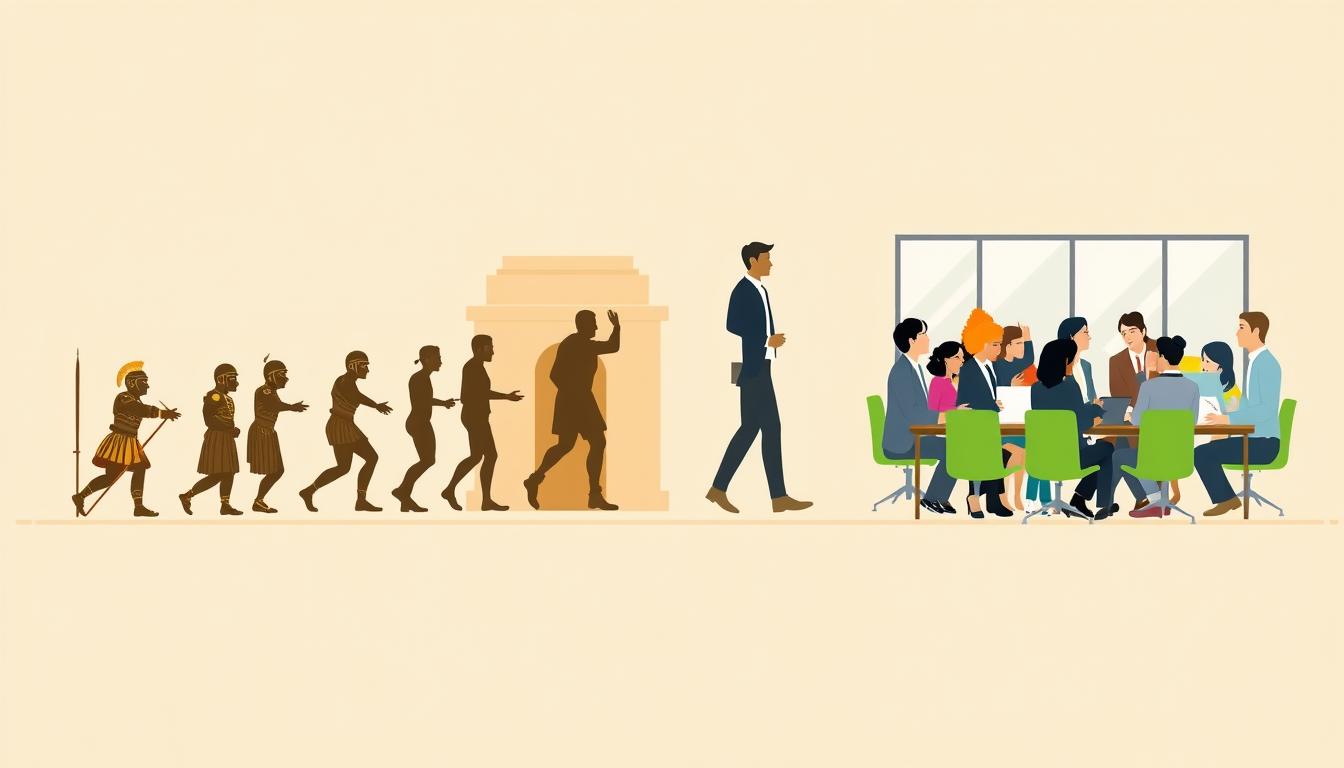
The Evolution of Team Building: From Military Formations to Modern Workplaces
The concept of team building has ancient origins that provide valuable insights for modern practitioners. The word “team” derives from the Old Norse “taumr,” meaning a bridle or rein that connects, suggesting the fundamental importance of connection and coordination. Throughout history, successful civilizations understood that properly coordinated groups could achieve what individuals could not. For instance, in ancient Rome, the legions exemplified the power of teamwork, where soldiers were trained to work in unison, adapting to various battle scenarios, thus highlighting the effectiveness of strategic collaboration.
Ancient military commanders recognized that victory depended not on individual heroism but on coordinated action and mutual support. The Greek phalanx formation, where soldiers stood shoulder to shoulder with overlapping shields, created an almost impenetrable defense that was far stronger than any single warrior. This early example demonstrates how structure, clear roles, and interdependence create collective strength—principles that remain central to effective team building today. Moreover, the use of formations in battles, such as the Roman testudo, which provided a protective shield wall, illustrates how collaboration can enhance safety and effectiveness in achieving common goals.
The industrial revolution transformed team dynamics as manufacturing processes required unprecedented levels of coordination. Frederick Winslow Taylor’s scientific management principles emphasized specialized roles and standardized processes, promoting efficiency and productivity through systematic approaches. Taylor’s methods encouraged workers to collaborate more effectively within their defined roles. Meanwhile, Henry Ford’s assembly line demonstrated how carefully orchestrated teamwork could dramatically increase productivity, allowing for mass production of goods. These approaches, while mechanistic by today’s standards, established the importance of deliberate team design and process optimization, paving the way for modern organizational structures that prioritize collaboration and communication.
Why Traditional Team Building Approaches Fall Short
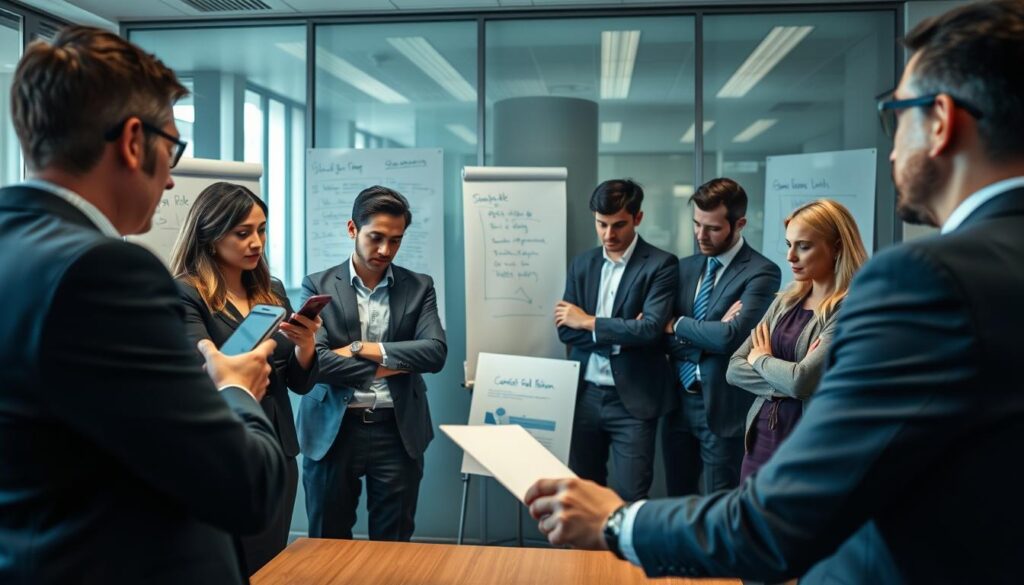
Despite widespread recognition of its importance, many team building initiatives fail to deliver meaningful results. Understanding these failure points is essential before implementing new approaches:
Disconnection from Actual Work Challenges
Many team building activities exist in a vacuum, disconnected from the real challenges teams face. According to research by the Corporate Executive Board, 96% of employees report that team building activities that don’t address actual workplace challenges have minimal lasting impact. This disconnect is particularly concerning because it suggests that these activities are often designed without input from the teams themselves, leading to a lack of relevance and engagement. When teams engage in artificial exercises that bear little resemblance to their daily collaboration needs, any insights gained rarely transfer to improved workplace performance. Instead of fostering genuine connections and problem-solving skills, these activities can become mere distractions, reinforcing a sense of frustration among team members who feel their time could be better spent addressing real issues. This misalignment between team building initiatives and the actual work environment can ultimately hinder team cohesion and productivity, making it crucial for organizations to rethink their approach to team development.
Overemphasis on Personality-Based Approaches
While understanding personality differences has value, excessive focus on personality assessments often reinforces stereotypes and creates artificial divisions. This can lead to an environment where team members feel pigeonholed into specific roles based on their assessed traits, rather than being viewed as dynamic individuals capable of adapting to various situations. Research published in the Journal of Applied Psychology found that team building approaches heavily centered on personality typing explain less than 9% of variance in team performance. This statistic highlights a critical issue: teams need frameworks that acknowledge individual differences while focusing on shared processes and outcomes rather than categorizing people into rigid types.
Instead of relying solely on personality assessments, effective team building should incorporate strategies that foster collaboration, communication, and collective problem-solving. By prioritizing these aspects, teams can cultivate a more inclusive atmosphere that leverages the diverse strengths of all members, ultimately enhancing overall performance and cohesion.
Failure to Address Power Dynamics
Team building initiatives ignore existing power imbalances, creating an illusion of equality that doesn’t match workplace reality. When hierarchical relationships, status differences, and informal influence networks remain unaddressed, team members engage superficially while maintaining protective behaviors. This superficial engagement often leads to a lack of trust and openness, which are essential for effective collaboration.
Team members may feel hesitant to share their ideas or concerns, fearing repercussions or judgment based on their position within the hierarchy. Effective team building must acknowledge and constructively address power dynamics rather than pretending they don’t exist. By fostering an environment where all voices are heard and valued, organizations can break down barriers that hinder authentic communication and collaboration, ultimately leading to more innovative and effective teamwork.
Neglecting Structural and Systemic Issues
Teams operate within organizational systems that often create contradictions between stated values and rewarded behaviors. For instance, when companies promote collaboration while maintaining competitive evaluation systems, team members may find themselves torn between working together and competing against one another for recognition and rewards. This conflict can stifle genuine teamwork and lead to frustration among employees who wish to collaborate but feel incentivized to prioritize individual achievements. Similarly, when organizations emphasize innovation while punishing failure, they create an environment where team members are reluctant to take risks or share bold ideas, fearing negative repercussions. As a result, team building efforts become exercises in frustration, as individuals may feel constrained by the very systems designed to support them.
The most effective team development addresses both interpersonal dynamics and the systemic context in which teams operate. By aligning organizational values with actual practices and creating a culture that encourages open communication and risk-taking, teams can thrive and achieve their full potential.
Treating Team Building as an Event Rather Than a Process
Perhaps the most common mistake is viewing team building as a discrete event rather than an ongoing process integrated into daily work. This misconception can lead to missed opportunities for growth and development, as team dynamics are not static but evolve over time. Research by Deloitte found that teams that engage in regular, work-embedded reflection and adaptation outperform those that rely on occasional off-site events by 28%. This statistic highlights the significant advantage of fostering a culture of continuous improvement and learning within teams. Sustainable team development requires consistent attention to team dynamics through regular reflection, feedback, and adjustment. By making team building a routine part of the work environment, organizations can cultivate stronger relationships among team members, enhance collaboration, and ultimately drive better outcomes. Regular check-ins and open dialogues can help identify areas for improvement and allow teams to celebrate successes, reinforcing a positive team culture.
5 Evidence-Based Steps to Transform Group Dynamics

1. Establish Psychological Safety as the Foundation
Google’s Project Aristotle research identified psychological safety—the belief that one won’t be punished or humiliated for speaking up with ideas, questions, concerns, or mistakes—as the most critical factor in team effectiveness. Without this foundation, other team building efforts will yield limited results.
Create Safety Through Leadership Modeling
Leaders must demonstrate vulnerability by acknowledging their own limitations, mistakes, and learning needs. When a leader openly admits uncertainty, asks for help, or discusses personal growth areas, it signals to team members that authenticity is valued over perfection. This modeling creates permission for others to bring their full selves to work without fear of judgment.
Implement Structured Feedback Protocols
Develop clear processes for giving and receiving feedback that separate observation from evaluation and focus on specific behaviors rather than personality traits. Structured protocols like “I noticed… I felt… I need…” create safety by making feedback predictable, balanced, and actionable rather than personal or threatening.
2. Clarify Purpose, Goals, and Roles
Teams thrive when members share a compelling purpose, understand their collective goals, and have clarity about individual responsibilities and contributions.
Develop a Team Charter
Facilitate a collaborative process to create a written team charter that articulates the team’s purpose (why it exists), mission (what it does), values (how it operates), and success metrics (how it measures achievement). This document serves as both a decision-making guide and an onboarding tool for new members, ensuring continuity of purpose over time.
Create a RACI Matrix
Reduce role ambiguity by developing a Responsibility Assignment Matrix that clarifies who is Responsible, Accountable, Consulted, and Informed for key team deliverables and decisions. This visual tool prevents duplication of effort, reduces conflict over territory, and ensures that critical tasks don’t fall through the cracks.
3. Design Collaborative Work Processes
Effective teams need structured processes that facilitate coordination, communication, and collective problem-solving.
Implement Agile Methodologies
Adapt agile practices like daily stand-ups, sprint planning, and retrospectives to create regular touchpoints for alignment and adjustment. These lightweight, high-frequency interactions help teams stay coordinated without excessive meetings while building habits of continuous improvement through regular reflection.
Establish Decision-Making Frameworks
Reduce decision paralysis by explicitly defining which decisions require consensus, which can be made consultatively, and which can be delegated to individuals. Tools like the RAPID model (Recommend, Agree, Perform, Input, Decide) create clarity about decision rights and prevent both bottlenecks and misalignment.
4. Develop Conflict Resolution Capabilities
Productive conflict around ideas drives innovation, while unresolved interpersonal tensions destroy collaboration. Teams need skills and processes to engage in healthy disagreement.
Train in Crucial Conversations
Provide team members with frameworks for addressing difficult topics when stakes are high, opinions differ, and emotions run strong. Skills like separating facts from interpretations, expressing concerns without triggering defensiveness, and finding mutual purpose create the foundation for productive dialogue around sensitive issues.
Establish Conflict Norms
Collaboratively develop explicit agreements about how the team will handle disagreements. These might include commitments to address conflicts directly rather than triangulating, to focus on interests rather than positions, and to separate the problem from the person. Having these norms in place before conflict arises prevents escalation when tensions emerge.
5. Build Habits of Reflection and Adaptation
High-performing teams continuously evaluate and adjust their approach based on experience and changing conditions.
Conduct Regular Retrospectives
Schedule structured reflection sessions after significant milestones or at regular intervals (monthly/quarterly) to examine what’s working, what’s not, and what adjustments would improve team effectiveness. Using formats like “Start-Stop-Continue” or “What, So What, Now What” helps teams extract actionable insights from their collective experience.
Implement Team Effectiveness Surveys
Use brief, regular assessments to gather data on team dynamics across dimensions like trust, communication, decision-making, and conflict resolution. Tracking these metrics over time helps identify patterns, measure progress, and focus development efforts on the most critical improvement areas.
Comprehensive Team Building Implementation Checklist
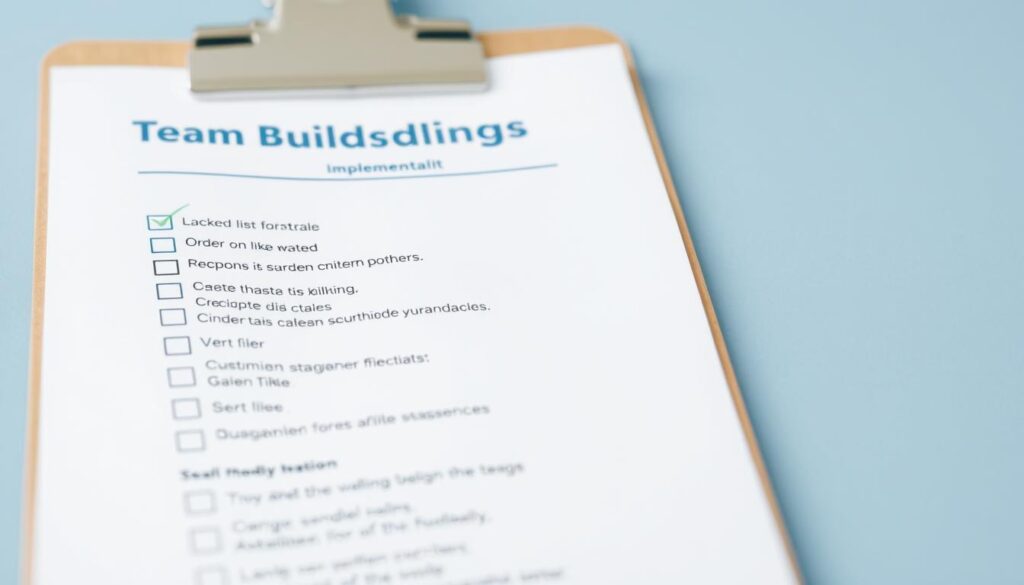
- Assess current team functioning using a validated team effectiveness survey
- Conduct individual interviews to identify perceived strengths and challenges
- Facilitate a psychological safety workshop with concrete behavior agreements
- Develop and document a team charter with purpose, mission, values, and goals
- Create RACI matrix clarifying roles and responsibilities for key deliverables
- Establish decision-making framework with clear processes for different decision types
- Implement regular team huddles (15-30 minutes) for alignment and coordination
- Develop communication protocols for different information types and urgency levels
- Train team in conflict resolution skills and crucial conversation frameworks
- Create explicit team norms for addressing disagreements constructively
- Establish recognition practices that highlight collaborative behaviors and team wins
- Implement quarterly team effectiveness reviews with specific improvement actions
- Develop onboarding process for integrating new team members effectively
- Create knowledge sharing systems to leverage diverse team expertise
- Align individual development plans with team capability needs
- Establish metrics dashboard tracking both team process and outcome measures
5 Critical Team Building Mistakes That Undermine Results
1. Prioritizing Activities Over Outcomes
Many organizations focus on conducting team building activities without clearly defining the outcomes they’re trying to achieve. This activity-centered approach leads to disconnected exercises that may be entertaining but fail to address fundamental team needs. Instead of asking “What team building activity should we do next?” effective leaders ask “What specific team capability do we need to develop?” and then design experiences that directly build that capability. The most valuable team building isn’t measured by how fun it was, but by how it changed the team’s ability to collaborate effectively.
2. Ignoring Team Development Stages
Teams naturally progress through developmental stages—forming, storming, norming, and performing—each requiring different leadership approaches and interventions. Applying late-stage team building techniques to newly formed teams or basic team formation activities to mature teams creates frustration and wastes resources. Effective team development acknowledges the team’s current stage and implements appropriate strategies: establishing psychological safety in forming stages, addressing conflict constructively during storming, creating systems and processes during norming, and focusing on continuous improvement during performing.
3. Neglecting Virtual and Hybrid Team Dynamics
As remote and hybrid work arrangements become increasingly common, many organizations continue applying in-person team building approaches without adapting to the unique challenges of distributed teams. Virtual teams require more explicit communication norms, more frequent check-ins, and more intentional relationship-building than co-located teams. Effective virtual team building addresses the specific challenges of distance collaboration: combating isolation, creating presence across distance, managing information asymmetry, and building trust without physical proximity.
4. Failing to Address Interdepartmental Collaboration
Many team building efforts focus exclusively on improving dynamics within functional teams while ignoring the critical interfaces between teams. In complex organizations, the most significant performance gaps often occur at these boundaries, where different priorities, languages, and working styles create friction. Effective team building includes cross-functional experiences that build relationships across departmental lines, create shared understanding of interdependencies, and establish protocols for coordination across organizational boundaries.
5. Underinvesting in Team Leadership Development
Organizations often implement team building for team members without adequately preparing team leaders to sustain the desired changes. Research by the Center for Creative Leadership found that 60% of team building initiatives fail to produce lasting results because team leaders lack the skills to reinforce new behaviors and address emerging challenges. Effective team development includes equipping leaders with coaching skills, conflict management techniques, and process facilitation capabilities that enable them to guide team development between formal team building interventions.
Measuring Team Building Impact: Comprehensive Metrics Framework
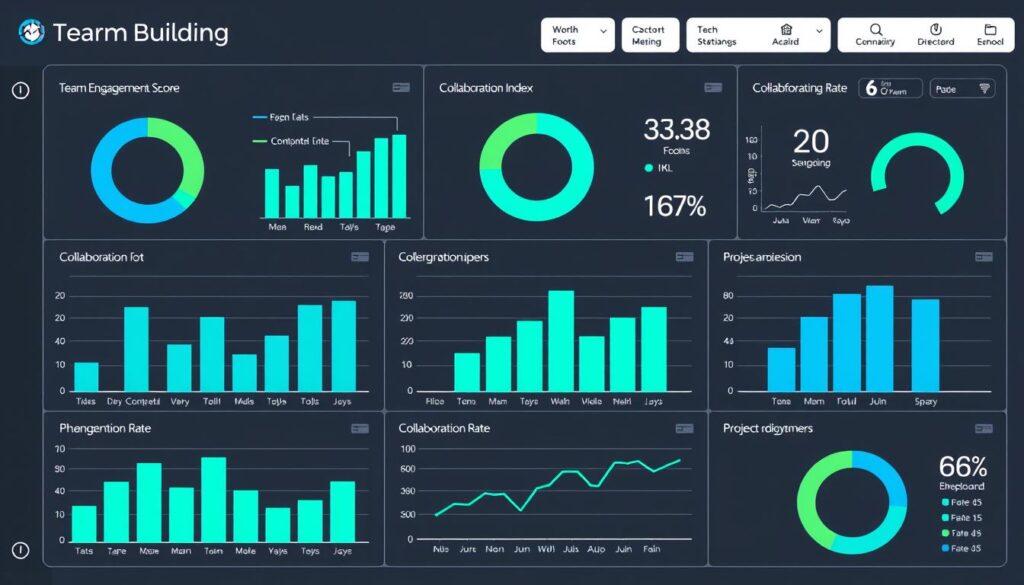
Quantitative Performance Indicators
Productivity Metrics
- 25-35% reduction in project completion time
- 15-25% increase in output per team member
- 30-40% decrease in rework requirements
- 20-30% improvement in resource utilization
Quality Metrics
- 40-50% reduction in customer-reported defects
- 25-35% decrease in internal quality issues
- 15-25% improvement in customer satisfaction scores
- 30-40% reduction in compliance violations
Team Process Indicators
Communication Effectiveness
- 30-40% reduction in meeting time
- 25-35% increase in information sharing across functions
- 40-50% improvement in clarity of action items
- 20-30% reduction in email volume for internal coordination
Decision Quality
- 35-45% reduction in decision reversal rate
- 20-30% decrease in decision implementation time
- 25-35% improvement in stakeholder buy-in
- 15-25% increase in innovative solution generation
Human Capital Metrics
Engagement and Retention
- 30-40% improvement in employee engagement scores
- 25-35% reduction in voluntary turnover
- 20-30% decrease in absenteeism
- 35-45% increase in internal mobility within teams
Talent Development
- 40-50% increase in peer-to-peer learning activities
- 25-35% improvement in skill versatility within team
- 30-40% reduction in onboarding time for new team members
- 20-30% increase in promotion readiness among team members
The Strategic Value of Effective Team Building
Beyond these specific metrics, effective team building creates organizational capabilities that provide sustainable competitive advantage:
- Organizational Resilience: Teams with strong relationships and clear processes adapt more quickly to market disruptions, technological changes, and competitive threats.
- Innovation Capacity: Psychologically safe teams generate 41% more creative ideas and implement innovations 29% faster than teams where members fear judgment.
- Operational Agility: Well-coordinated teams reduce decision latency by 60% and implementation time by 40%, enabling faster response to emerging opportunities.
- Talent Magnetism: Organizations known for strong team cultures attract high-caliber candidates, with 67% of job seekers citing team environment as a top consideration.
- Customer Experience: Internal team effectiveness directly impacts customer interactions, with research showing that teams scoring in the top quartile for collaboration deliver 32% higher customer satisfaction.
Top 5 Team Building Resources to Transform Your Organization
To deepen your understanding and implementation of effective team building principles, these five exceptional resources offer evidence-based frameworks, practical tools, and transformative insights. Each addresses different aspects of team development and provides actionable strategies you can implement immediately.
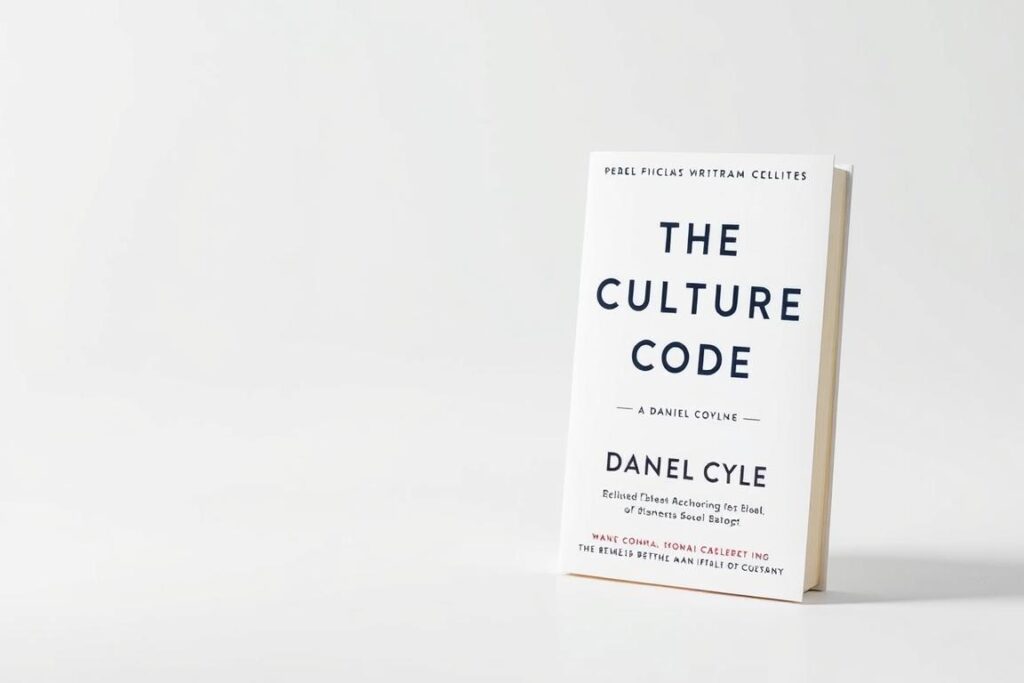
The Culture Code
Daniel Coyle’s groundbreaking work reveals the hidden science behind high-performing teams across diverse industries. Drawing on extensive research with elite organizations like Pixar, Navy SEALs, and basketball teams, Coyle identifies three key skills that transform group dynamics: building safety, sharing vulnerability, and establishing purpose.
Price Range: $14-$27
Customer Rating: 4.8/5 stars
Teaming
Harvard professor Amy Edmondson’s essential guide explores how organizations can foster effective collaboration in dynamic, uncertain environments. The book introduces the concept of “teaming” as an active process rather than a static structure, providing frameworks for psychological safety, continuous learning, and cross-boundary collaboration.
Price Range: $18-$32
Customer Rating: 4.6/5 stars
The Fearless Organization
Building on decades of research, Amy Edmondson provides a comprehensive guide to creating psychological safety in teams and organizations. The book offers practical strategies for fostering environments where people feel safe to take risks, speak up, and contribute their full potential without fear of embarrassment or punishment.
Price Range: $16-$30
Customer Rating: 4.7/5 stars
Crucial Conversations
This practical guide by Kerry Patterson, Joseph Grenny, Ron McMillan, and Al Switzler provides a framework for handling high-stakes discussions effectively. The book offers specific techniques for creating mutual understanding, managing emotions, and achieving positive outcomes when opinions differ and feelings run strong—essential skills for any team.
Price Range: $13-$25
Customer Rating: 4.7/5 stars
Team of Teams
General Stanley McChrystal shares how he transformed a rigid military hierarchy into an agile network of teams to combat Al Qaeda. The book provides insights on creating adaptable team structures that maintain coordination while empowering decision-making at all levels—lessons applicable to any organization facing complexity and rapid change.
Price Range: $15-$28
Customer Rating: 4.6/5 stars

Kindle E-Reader
Access all these team building resources and thousands more on a Kindle device. With adjustable lighting, weeks of battery life, and a glare-free display, it’s perfect for professional development reading anywhere. Store your entire leadership library in one lightweight device with instant access to new titles.
Price Range: $89-$249
Customer Rating: 4.7/5 stars
Team Building Resource Comparison
| Resource | Author | Primary Focus | Price Range | Rating | Best For |
| The Culture Code | Daniel Coyle | Group Culture & Dynamics | $14-$27 | 4.8/5 | Senior Leaders |
| Teaming | Amy Edmondson | Dynamic Collaboration | $18-$32 | 4.6/5 | Project Leaders |
| The Fearless Organization | Amy Edmondson | Psychological Safety | $16-$30 | 4.7/5 | HR Professionals |
| Crucial Conversations | Patterson, Grenny, et al. | Difficult Dialogues | $13-$25 | 4.7/5 | Team Members |
| Team of Teams | Stanley McChrystal | Organizational Structure | $15-$28 | 4.6/5 | Organizational Designers |
| Kindle E-Reader | Amazon | Digital Library Access | $89-$249 | 4.7/5 | Continuous Learners |
Special Offer: Build Your Team Development Library!
Many of these essential team building resources are currently available with special discounts and bundle offers. Click the links above to check current pricing and availability. For digital readers who prefer convenience and instant access, consider getting your Kindle device today to build your leadership library with thousands of professional development resources at your fingertips.
12 Effective Team Building Activities for Different Team Needs

Effective team building activities should be purposefully selected to address specific team needs rather than implemented generically. Here are twelve evidence-based activities categorized by the team capability they develop:
Activities to Build Trust and Psychological Safety
Personal History Exercise
Team members take turns sharing three defining moments from their personal or professional lives. This structured vulnerability creates connection through shared humanity rather than superficial icebreakers. Research shows that revealing appropriate personal information increases psychological safety scores by up to 27% and accelerates trust formation in new teams.
Failure Celebration Circle
Team members share recent mistakes, what they learned, and how they’d approach the situation differently. Leaders participate first, modeling constructive vulnerability. This practice normalizes imperfection and reframes failure as learning, creating psychological safety for risk-taking and innovation. Teams practicing this monthly report 34% higher rates of proactive problem identification.
Activities to Improve Communication
Communication Styles Workshop
Team members identify their communication preferences across dimensions like direct/indirect, detail-oriented/big picture, and emotional/logical. Rather than labeling personalities, this activity focuses on developing adaptability and mutual accommodation. Teams that complete this workshop show a 31% reduction in communication-related conflicts within three months.
Blind Drawing Exercise
Partners sit back-to-back with one describing an image while the other draws it based solely on verbal instructions. This activity highlights assumptions, clarification needs, and feedback loops in communication. Teams report 25% improvement in instruction clarity and 40% reduction in misunderstandings after practicing this skill.
Activities to Enhance Problem-Solving
Constraint Storming
Teams tackle real work challenges while deliberately imposing constraints (time, resources, communication channels) that force creative thinking. This approach prevents default thinking patterns and generates innovative solutions. Research shows that teams using constraint-based methods generate 37% more unique solutions than traditional brainstorming approaches.
Perspective Rotation
Team members analyze a problem from multiple stakeholder perspectives (customers, partners, competitors, future employees) using structured prompts. This method reduces groupthink and expands solution possibilities. Organizations implementing this approach report 42% higher stakeholder satisfaction with team decisions.
Activities to Strengthen Collaboration
Skill Mapping Exercise
Teams create a visual representation of each member’s skills, knowledge areas, and development interests. This map serves as a resource allocation tool and identifies mentoring opportunities. Teams with skill visibility report 29% more cross-functional collaboration and 35% faster problem resolution through appropriate expertise matching.
Interdependence Mapping
Team members visualize how their work impacts others and how they depend on colleagues using a structured template. This activity builds awareness of workflow connections and creates empathy for interdependent roles. Teams that map interdependencies show 33% fewer handoff errors and 27% improved resource coordination.
Activities for Remote and Hybrid Teams
Virtual Office Tour
Team members give brief video tours of their remote workspaces, sharing meaningful objects or explaining their setup. This creates environmental context that’s missing in virtual interactions. Remote teams implementing this practice report 38% higher connection scores and 23% improved understanding of colleagues’ work conditions.
Distributed Problem-Solving Challenge
Teams solve complex puzzles where critical information is distributed among members who can only communicate through specific channels. This simulates remote collaboration challenges while building coordination skills. Teams practicing this monthly show 36% improvement in virtual collaboration effectiveness.
Activities for Team Reflection and Growth
Appreciative Inquiry Session
Teams identify peak experiences when they performed exceptionally well, analyze the conditions that enabled success, and design ways to replicate those conditions. This strengths-based approach builds confidence and transfers successful practices. Organizations using this method report 40% higher team efficacy beliefs and 32% improved performance consistency.
Team Journey Mapping
Teams create a visual timeline of their history, marking significant milestones, challenges overcome, and lessons learned. This creates shared narrative and institutional memory while highlighting growth. Teams that document their journey show 44% stronger collective identity and 29% better integration of new members.
Virtual Team Building: Strategies for Distributed Teams
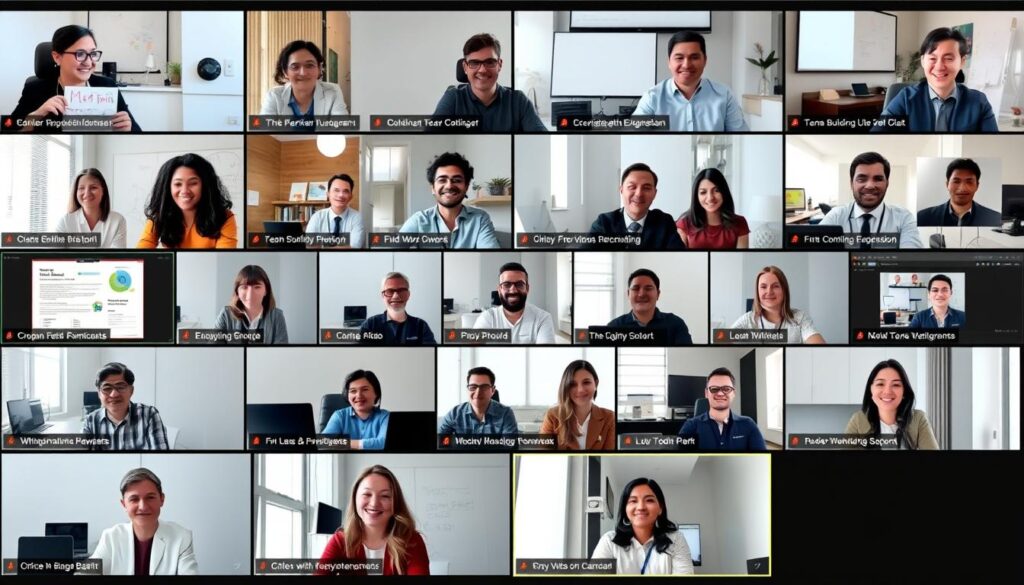
As remote and hybrid work arrangements become permanent features of the organizational landscape, leaders must adapt team building approaches to address the unique challenges of virtual collaboration. Research by the Institute for Corporate Productivity found that high-performing organizations are 2.7 times more likely to have structured approaches to virtual team development compared to low-performing peers.
Core Challenges of Virtual Team Building
Virtual team building must address four fundamental challenges that differ from in-person environments:
- Presence Disparity: The unequal experience of team members who are physically present versus those connecting remotely creates information asymmetry and participation barriers.
- Relationship Formation: The absence of informal interactions that naturally occur in physical workplaces requires deliberate relationship-building structures.
- Communication Bandwidth: Virtual channels reduce access to non-verbal cues, contextual information, and emotional signals that facilitate understanding.
- Work-Life Boundary Management: Remote work blurs the lines between professional and personal domains, creating potential for burnout and disconnection.
Effective Virtual Team Building Strategies
Structured Informal Connections
Create deliberate opportunities for the casual interactions that happen naturally in physical workplaces. Virtual coffee chats, digital water cooler channels, and randomized peer connections help build relationships beyond transactional work interactions. Research shows teams that implement at least two structured informal connection points weekly report 37% higher trust scores than those relying solely on work-focused meetings.
Asynchronous Team Building
Develop team building activities that don’t require simultaneous participation, accommodating different time zones and work schedules. Photo challenges, shared playlists, or progressive team stories allow meaningful participation without synchronous meetings. Organizations using asynchronous approaches report 42% higher inclusion scores from team members in different time zones.
Digital Collaboration Tools Mastery
Invest time in developing team proficiency with virtual collaboration platforms beyond basic functionality. When teams master advanced features of tools like Miro, Mural, or collaborative document platforms, they report 53% higher meeting productivity and 47% stronger engagement in virtual sessions. Regular tool training should be considered essential team building.
Multi-Modal Communication Protocols
Establish clear agreements about which communication channels are appropriate for different types of interactions. Teams with explicit protocols for when to use video, voice, chat, email, or asynchronous documentation report 39% fewer communication breakdowns and 45% faster decision-making in virtual environments.
Hybrid-Specific Team Building Approaches
Hybrid teams face unique challenges beyond fully co-located or fully remote arrangements. These strategies address the specific dynamics of mixed-presence teams:
Location Equity Practices
Implement protocols that equalize participation regardless of location. These might include “one person, one screen” approaches where even co-located team members join from individual devices, or meeting facilitators specifically dedicated to monitoring remote participant engagement. Teams using location equity practices report 47% higher psychological safety among remote members.
Hybrid-Conscious Event Design
Design team activities with simultaneous in-person and remote experiences that provide equivalent value. Rather than trying to replicate the same activity across contexts, create complementary experiences that leverage the strengths of each environment. Organizations using this approach report 38% higher satisfaction with team events across all participation modes.
Measuring Virtual Team Building Effectiveness
Virtual team building requires specific metrics that may differ from traditional team development measures:
- Digital Collaboration Quality: Assess the effectiveness of virtual interactions through metrics like meeting equity (participation distribution), decision documentation quality, and asynchronous contribution rates.
- Connection Perception: Regularly measure team members’ sense of connection to colleagues through pulse surveys addressing belonging, psychological safety, and relationship quality.
- Information Flow: Track how effectively information moves through the team using metrics like knowledge accessibility, cross-functional awareness, and communication response times.
- Work-Life Harmony: Monitor indicators of sustainable remote collaboration like after-hours communication frequency, reported stress levels, and boundary management satisfaction.
The Business Case for Team Building: Calculating ROI
While the qualitative benefits of team building are widely recognized, organizations increasingly require quantitative justification for these investments. Research by Deloitte found that companies with structured approaches to measuring team development ROI are 3.2 times more likely to sustain funding for these initiatives compared to those relying solely on anecdotal evidence.
Direct Cost Savings from Effective Team Building
Reduced Turnover Costs
Teams with high psychological safety and strong collaboration experience 27-34% lower turnover than industry averages. With replacement costs ranging from 50-200% of annual salary depending on role complexity, this reduction creates significant savings. A 100-person organization with average salaries of $70,000 can save $500,000-$1.2 million annually through improved retention resulting from effective team building.
Decreased Coordination Costs
Well-functioning teams spend 32% less time on coordination activities like excessive meetings, redundant communications, and conflict resolution. For knowledge workers spending an average of 15 hours weekly on coordination (at $50/hour), this efficiency represents approximately $12,500 in recovered productive time per employee annually.
Productivity and Performance Gains
Accelerated Time-to-Results
Teams with strong collaboration capabilities complete projects 23-38% faster than those with poor team dynamics. For product development initiatives with average durations of 12 months, this acceleration can represent millions in earlier revenue realization or market advantage. Research by McKinsey found that reducing time-to-market by three months in competitive industries increases lifetime product profitability by 30%.
Enhanced Innovation Output
Teams with high psychological safety generate 41% more implementable innovations annually compared to low-safety teams. With average innovation implementation values of $250,000-$1M depending on industry, this increased output directly impacts bottom-line results. Organizations with systematic team building programs report innovation portfolios valued 2.7 times higher than those without such programs.
ROI Calculation Framework
To calculate team building ROI, organizations should use this comprehensive framework:
| Investment Category | Calculation Approach | Typical Range | Measurement Tools |
| Direct Program Costs | Facilitator fees + materials + venue + participant time | $10,000-$50,000 per team annually | Program budgets, time tracking |
| Turnover Reduction | (Baseline turnover % – New turnover %) × Average replacement cost | $100,000-$1M+ annually | HR analytics, exit interviews |
| Productivity Improvement | Hours saved × Hourly labor cost × Number of employees | $5,000-$15,000 per employee annually | Time studies, project tracking |
| Quality Improvement | Reduction in errors × Average cost per error | $50,000-$500,000 annually | Quality metrics, rework tracking |
| Innovation Value | Additional innovations × Average innovation value | $250,000-$2M+ annually | Innovation tracking, value estimation |
Case Study: Manufacturing Organization Team Building ROI
A mid-sized manufacturing company implemented a comprehensive team building program across 12 production teams with these results:
- Investment: $175,000 in facilitation, materials, and participant time
- Turnover Reduction: From 22% to 14% annually, saving $420,000 in replacement costs
- Quality Improvement: 32% reduction in defect rates, saving $380,000 in rework and warranty costs
- Productivity Gain: 17% increase in output per labor hour, valued at $620,000 annually
- Total First-Year Return: $1,420,000
- ROI: 711% ($1,420,000 ÷ $175,000 × 100 – 100)
This case demonstrates that systematic, well-designed team building initiatives can deliver measurable financial returns far exceeding their implementation costs. The key to achieving similar results lies in designing interventions that directly address business-critical team capabilities and establishing clear metrics to track impact over time.
Inclusive Team Building: Strategies for Diverse Teams

As organizations become increasingly diverse, team building approaches must evolve to create truly inclusive environments where all members can contribute their unique perspectives and talents. Research by Deloitte found that inclusive teams outperform their peers by 80% in team-based assessments, yet many traditional team building approaches inadvertently create barriers to full participation.
Common Inclusivity Challenges in Team Building
Traditional team building often contains hidden barriers that limit participation and reinforce existing power dynamics:
- Physical Accessibility: Activities requiring specific physical capabilities can exclude team members with disabilities or different ability levels.
- Cultural Assumptions: Exercises based on Western communication norms or requiring personal disclosure may conflict with cultural values of some team members.
- Socioeconomic Factors: Activities requiring financial resources (equipment, travel, attire) can create uncomfortable situations for team members with different economic circumstances.
- Cognitive Diversity: Approaches that favor specific thinking styles (verbal vs. visual, spontaneous vs. reflective) can marginalize team members with different cognitive preferences.
- Power Dynamics: Exercises that don’t account for organizational hierarchy may reinforce existing power imbalances rather than creating psychological safety.
Principles of Inclusive Team Building
Design for Multiple Participation Modes
Create activities with multiple ways to engage and contribute. Effective inclusive team building offers options for verbal, written, visual, and kinesthetic participation, allowing team members to engage through their preferred modes while practicing less comfortable ones. Teams using multi-modal approaches report 37% higher engagement from all members compared to single-mode activities.
Establish Participation Equity
Implement structures that distribute speaking time and influence more evenly across team members. Techniques like round-robin input, anonymous idea submission, or designated discussion facilitators help prevent dominant voices from controlling team interactions. Organizations using structured equity approaches report 42% higher idea implementation from traditionally underrepresented team members.
Provide Appropriate Preparation Time
Balance spontaneous interaction with advance preparation opportunities. While some team members thrive in impromptu discussions, others perform best when given time to reflect and prepare contributions. Sharing discussion topics or questions in advance increases participation quality by 53% for team members from cultures that value thoughtful preparation.
Create Cultural Safety
Develop team norms that acknowledge and respect different cultural approaches to collaboration. Effective inclusive teams explicitly discuss cultural differences in areas like feedback styles, conflict approaches, and relationship building. Organizations that implement cultural safety practices report 48% higher psychological safety scores from team members with minority cultural backgrounds.
Inclusive Team Building Activities
These evidence-based activities are specifically designed to promote inclusion while building team capabilities:
Identity Circles Exercise
Team members individually map their various identities (professional, cultural, personal interests, etc.) and then share selected aspects with colleagues. This activity builds understanding of multidimensional diversity beyond visible characteristics while giving individuals control over what they share. Teams report 45% increased appreciation of colleague complexity after this exercise.
Perspective Mapping
Teams analyze challenges from multiple viewpoints based on different lived experiences. This structured approach helps members understand how diverse perspectives lead to better solutions while practicing perspective-taking skills. Organizations using this method report 39% more innovative solutions to complex problems.
Inclusive Decision-Making Simulation
Teams practice using decision-making frameworks that incorporate diverse input through structured processes like nominal group technique or multi-voting. These approaches prevent common biases like anchoring or bandwagon effects while ensuring all voices influence outcomes. Teams trained in inclusive decision methods make higher-quality decisions in 72% of evaluated scenarios.
Accessibility Awareness Challenge
Team members experience work tasks with simulated constraints (limited vision, one-handed operation, language barriers) to build empathy for different ability experiences. This activity leads to concrete accessibility improvements in team processes and communications. Organizations implementing this exercise report 53% more inclusive design in subsequent team deliverables.
Measuring Inclusion in Team Building
To ensure team building truly promotes inclusion, organizations should measure these key indicators:
- Psychological Safety Differential: Compare psychological safety scores across different demographic groups to identify experience gaps.
- Participation Distribution: Analyze speaking time, idea contribution, and influence patterns across team members during collaborative activities.
- Belonging Metrics: Regularly assess team members’ sense of belonging, acceptance, and value through anonymous surveys.
- Idea Implementation Equity: Track whose ideas get developed and implemented to ensure diverse contributions shape team outputs.
- Retention Patterns: Monitor whether turnover disproportionately affects certain groups, which may indicate inclusion challenges.
Conclusion: The Future of Team Building

As we’ve explored throughout this guide, effective team building is not about occasional activities or superficial bonding exercises—it’s about creating the conditions where diverse individuals can collaborate at their highest potential. By understanding the science behind team effectiveness and implementing evidence-based practices, organizations can transform ordinary groups into extraordinary teams capable of meeting today’s complex challenges.
The future of team building will be shaped by several emerging trends that forward-thinking organizations are already embracing:
- Integration with Work: The most effective team development will be embedded in actual work processes rather than separated as special events, creating continuous learning through structured reflection on real collaboration experiences.
- Hybrid-First Design: Team building will increasingly accommodate multiple participation modes simultaneously, creating equivalent but not identical experiences for in-person and remote team members.
- Neurodiversity Inclusion: As understanding of cognitive differences grows, team building will evolve to leverage diverse thinking styles as strategic advantages rather than attempting to standardize approaches.
- Measurement Sophistication: Organizations will develop increasingly nuanced metrics for team effectiveness that capture both process quality and outcome impact, enabling more precise team development investments.
The organizations that thrive in tomorrow’s complex, rapidly changing environment will be those that invest systematically in building teams capable of continuous learning, seamless collaboration, and innovative problem-solving. This investment begins with understanding why traditional approaches fall short and implementing the evidence-based strategies outlined in this guide.
For deeper exploration of these concepts, consider the recommended books that offer comprehensive frameworks and practical tools to transform your team building approach. Whether you’re a new team leader or an experienced executive, these resources will help you navigate the challenges and opportunities of building high-performing teams in today’s dynamic environment.