


🧠 What Is Deep Learning?
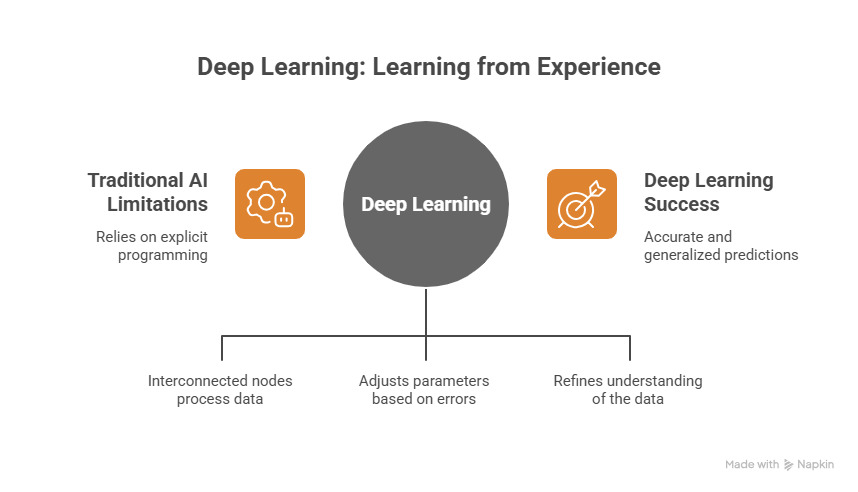
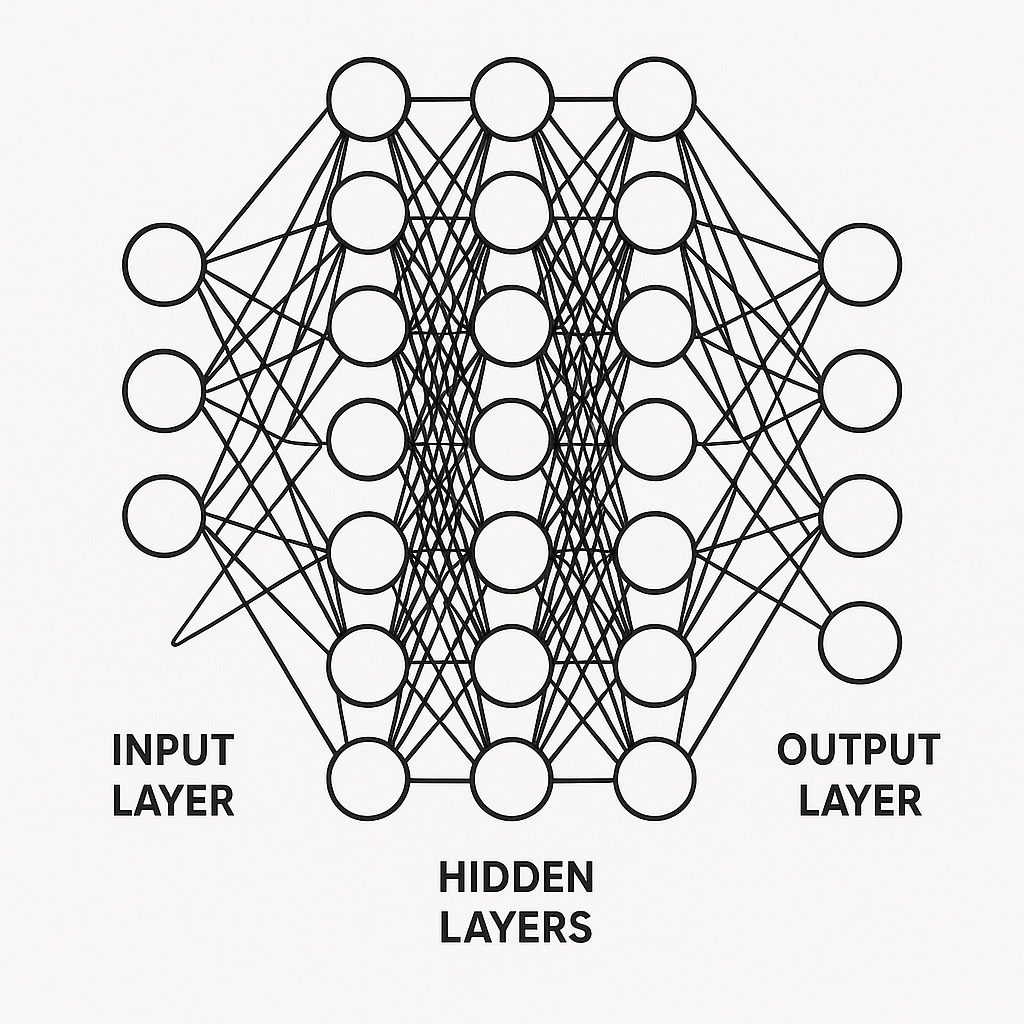
Deep learning is a subset of machine learning that uses artificial neural networks—modeled after the human brain—to analyze patterns and make predictions. Unlike traditional AI systems that rely on explicit programming and rule-based logic, deep learning models can identify complex patterns in data and improve their performance over time without human intervention. These neural networks consist of layers of interconnected nodes, or neurons, which process input data in a hierarchical manner, allowing the model to learn increasingly abstract features at each layer. This layered approach is what enables deep learning to excel in tasks such as image and speech recognition, where traditional algorithms often struggle.
If traditional AI learns by memorizing rules, deep learning learns by experience—just like humans. Imagine teaching a child to recognize cats. You don’t provide a detailed list of cat features; instead, you show them many examples until their brain builds a mental model. Deep learning works the same way, only with billions of examples and mathematical calculations instead of neurons and synapses. Through a process known as backpropagation, these networks adjust their internal parameters based on the errors in their predictions, gradually refining their understanding of the data. This iterative learning process allows deep learning systems to achieve remarkable accuracy and generalization, making them powerful tools in a variety of applications, from autonomous vehicles to medical diagnosis.
“Deep learning is teaching machines to dream in data, finding patterns too subtle for humans to see and connections too complex for us to program.”
⚙️ How Deep Learning Works — Simplified
Deep learning may seem complex, but its fundamental principles are surprisingly intuitive. Let’s break down how these powerful systems actually work:
🧩 Neural Networks
Artificial neural networks consist of layers of interconnected ‘neurons’ that process information. Each connection has a weight that strengthens or weakens the signal between neurons, similar to how our brain forms stronger connections through repeated use.
🧠 Training with Data
Deep learning models learn by analyzing thousands or millions of examples. For instance, to recognize cats, the model processes countless cat images, gradually adjusting its internal weights to better identify feline features.
⚙️ Backpropagation
When a model makes a mistake, backpropagation algorithms adjust the connection weights throughout the network to reduce future errors. This feedback loop is how neural networks learn and improve over time.
📈 The More Data, the Smarter It Gets
Deep learning thrives on large datasets and computing power. As we feed more examples into these systems, they become increasingly accurate at recognizing patterns and making predictions. This is because the more data a model has access to, the better it can learn and generalize from that information, which leads to improved performance on tasks such as image recognition, natural language processing, and more. This is why companies like Google and Facebook, with their massive data resources, have been at the forefront of deep learning innovation. Their ability to harness vast amounts of user-generated data allows them to train complex models that can outperform traditional algorithms, thereby enabling breakthroughs in various applications, from personalized recommendations to advanced AI-driven features that enhance user experiences.
Unlike traditional programming where humans write explicit rules, deep learning lets computers discover the rules themselves by finding patterns in data.
Deep Learning vs. Traditional Machine Learning
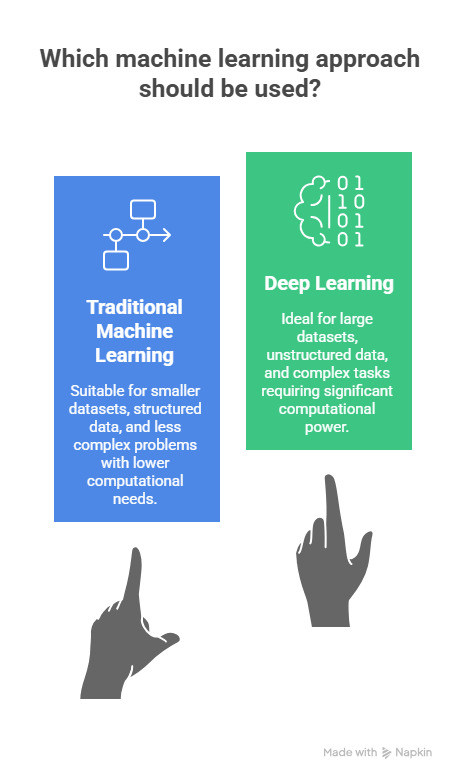
| Feature | Traditional Machine Learning | Deep Learning |
| Feature Extraction | Manual feature engineering required | Automatic feature learning |
| Data Requirements | Works with smaller datasets | Requires large amounts of data |
| Computational Needs | Less intensive, can run on CPU | Requires significant computing power (GPUs/TPUs) |
| Problem Complexity | Better for structured data and simpler problems | Excels with unstructured data and complex tasks |
| Interpretability | More transparent, easier to understand | Often a “black box,” harder to interpret |
Types of Deep Learning Neural Networks
Different deep learning tasks require specialized neural network architectures. Here are the most important types you should know about:
Convolutional Neural Networks (CNNs)
CNNs excel at image recognition and computer vision tasks. They use convolutional layers that scan across input data to detect spatial patterns, similar to how our visual cortex processes images. CNNs power facial recognition, object detection, and medical image analysis.
Recurrent Neural Networks (RNNs)
RNNs are designed for sequential data like text, time series, or speech. They maintain an internal memory that allows them to process information with a sense of order and context. This makes them ideal for language translation, speech recognition, and text generation.
Transformer Models
Transformers revolutionized natural language processing with their attention mechanisms that can focus on relevant parts of input data. They power models like GPT and BERT, enabling sophisticated language understanding and generation capabilities.
Generative Adversarial Networks (GANs)
GANs consist of two competing networks: a generator that creates new data and a discriminator that evaluates it. This adversarial process allows GANs to generate remarkably realistic images, videos, and other content that never existed before.
🌎 Real-World Applications Across Industries
Deep learning is transforming virtually every industry with its ability to solve previously intractable problems. Here are some of the most impactful applications:
🚗 Transportation
Autonomous driving systems from companies like Tesla and Waymo use deep neural networks to identify objects, predict movements, and make split-second decisions. These systems process camera, radar, and lidar data to navigate complex environments safely.
🏥 Healthcare
Deep learning models can detect tumors in medical images with accuracy that rivals or exceeds human radiologists. They’re also being used to predict patient outcomes, discover new drugs, and personalize treatment plans based on genetic data.
🎬 Entertainment
Netflix and Spotify use deep learning for personalized recommendations, analyzing your viewing or listening history to suggest content you’ll likely enjoy. This technology has revolutionized how we discover and consume media.
📦 Logistics
Companies like Amazon use deep learning for predictive routing, demand forecasting, and warehouse automation. These systems optimize delivery routes, predict inventory needs, and power robots that pick and pack orders.
💬 Customer Service
Chatbots and virtual assistants powered by deep learning can understand natural language, answer questions, and resolve customer issues without human intervention. They continuously improve by learning from each interaction.
🔍 Cybersecurity
Deep learning systems can detect unusual patterns that might indicate security threats, identifying potential breaches before they cause damage. They adapt to new attack vectors by learning from previous attempts.
Why Deep Learning Is a Game-Changer
Advantages of Deep Learning
- Learns autonomously without explicit programming
- Handles unstructured data: text, speech, video, images
- Powers innovation at scale — enabling new business models
- Achieves superhuman performance in specific domains
- Continuously improves with more data and training
- Bridges human and machine intelligence
Challenges of Deep Learning
- Requires massive amounts of training data
- Computationally intensive and expensive
- Often operates as a “black box” with limited explainability
- Can perpetuate or amplify biases in training data
- May struggle with tasks requiring common sense reasoning
- Vulnerable to adversarial attacks

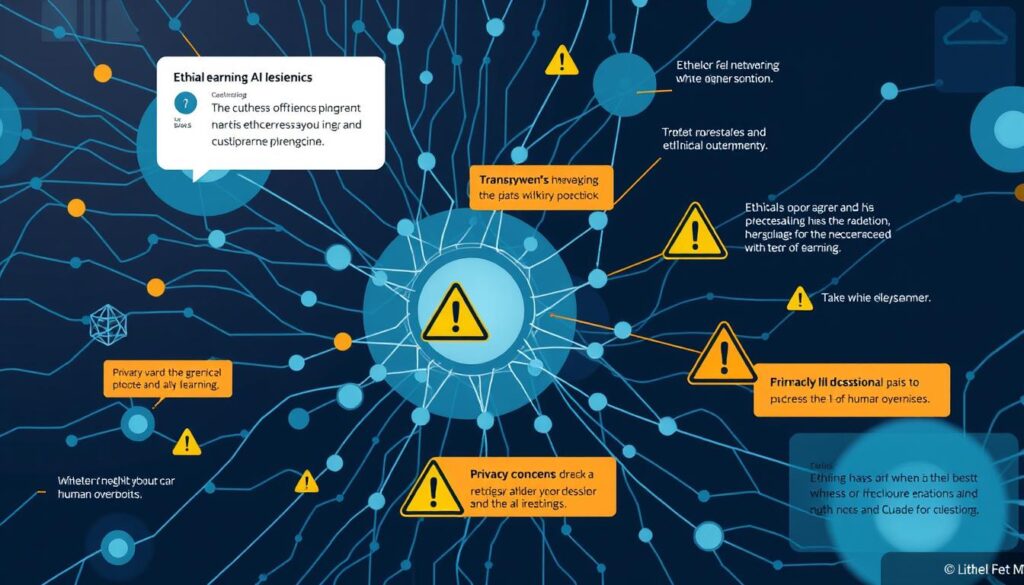
⚠️ Challenges and Ethical Considerations
As deep learning becomes more powerful and pervasive, we must address several important challenges:
Data Bias
AI learns from what it sees, including human biases. Models trained on biased data can perpetuate or even amplify societal inequalities. For example, facial recognition systems have shown higher error rates for women and people with darker skin tones when trained on predominantly white male datasets.
Privacy Risks
Deep learning models require massive amounts of data, raising concerns about privacy and data protection. Sensitive information can be exposed in training data or extracted from trained models through various attack methods.
Explainability
Deep learning decisions can be a “black box,” making it difficult to understand why a model made a particular prediction. This lack of transparency is problematic in high-stakes domains like healthcare, finance, and criminal justice.
The next evolution of deep learning won’t just be smarter—it will be more transparent and human-centered.
🚀 Step-by-Step Guide to Getting Started with Deep Learning
Ready to dive into the world of deep learning? Here’s how to begin your journey:
- Learn the fundamentals — Start with basic concepts of AI, machine learning, and neural networks. Understanding the mathematical foundations (linear algebra, calculus, and probability) will help, but many practical resources focus on intuition over formulas.
- Explore tools and frameworks — Get familiar with popular deep learning libraries like TensorFlow, PyTorch, and Keras. These frameworks handle the complex mathematics, allowing you to focus on building and training models.
- Get hands-on with public datasets — Practice with beginner-friendly datasets from Kaggle or ImageNet. Start with simple classification problems before moving to more complex tasks.
- Start small — Build your own image classifier or text generator. Beginning with manageable projects helps solidify your understanding before tackling more ambitious goals.
- Keep learning — The field evolves weekly. Follow research papers, blogs, and online communities to stay current with the latest techniques and breakthroughs.
📚 Books, Tools & Resources
Accelerate your deep learning journey with these highly recommended resources:
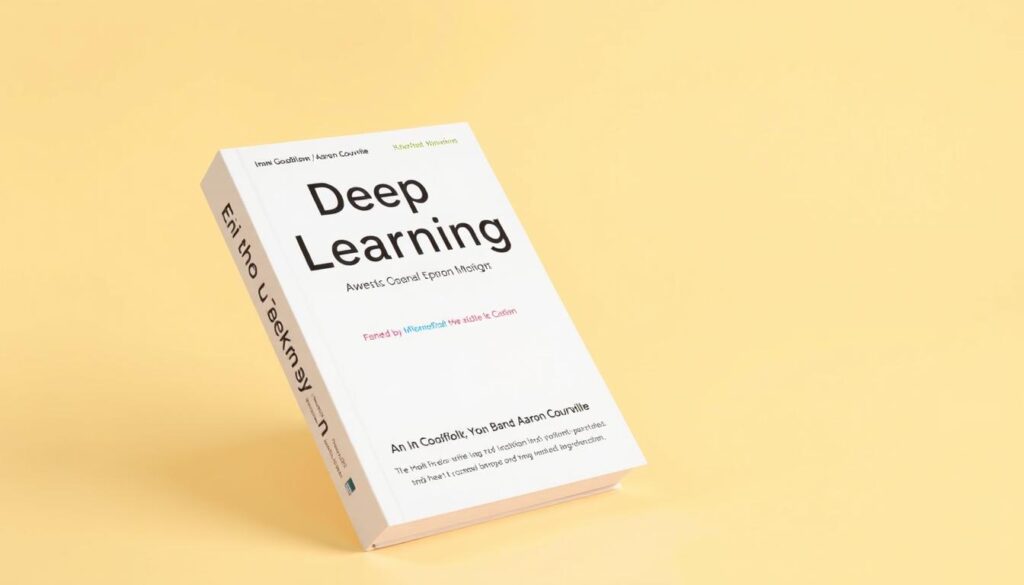
Deep Learning
By Ian Goodfellow, Yoshua Bengio, and Aaron Courville
Price: $60-80
The definitive textbook on deep learning fundamentals, written by leading researchers in the field. Comprehensive coverage of theory and mathematics behind neural networks.
“The bible of deep learning. Challenging but rewarding for serious students.”

Hands-On Machine Learning
By Aurélien Géron
Price: $40-60
Perfect for practitioners, this book balances theory with practical code examples using popular frameworks. Excellent for those who learn by doing.
“The perfect balance of theory and practice. Code examples actually work!”

Deep Learning for Beginners
By Steven Cooper
Price: $20-30
An accessible introduction to deep learning concepts with minimal mathematics. Ideal for absolute beginners wanting to understand the fundamentals.
“Finally, a deep learning book I can understand without a PhD in mathematics!”
| Book Title | Price Range | Skill Level | Rating | Best For |
| Deep Learning | $60-80 | Advanced | 4.7/5 | Theoretical foundations |
| Hands-On Machine Learning | $40-60 | Intermediate | 4.8/5 | Practical implementation |
| Deep Learning for Beginners | $20-30 | Beginner | 4.5/5 | Conceptual understanding |
Get Started with Kindle Unlimited
Access thousands of books on deep learning and AI with a Kindle Unlimited subscription. Try it free for 30 days.
🔍 Checklist Summary
Your Deep Learning Journey Checklist
- 🧠 Understand what deep learning is and how it differs from traditional AI
- 📊 Learn the tools and frameworks that power deep learning applications
- ⚙️ Apply deep learning concepts to real-world problems in your domain
- 🔬 Start with simple projects and gradually tackle more complex challenges
- 🤖 Combine human creativity with machine precision for optimal results
- 🔄 Stay current with the rapidly evolving deep learning landscape
The Future of Deep Learning
Deep learning isn’t about replacing human intelligence—it’s about extending it. As these technologies continue to evolve, we’ll see even more powerful applications that augment human capabilities and solve previously intractable problems. For instance, in healthcare, deep learning can analyze vast amounts of medical data to assist doctors in diagnosing diseases more accurately and swiftly. The question isn’t if your industry will use deep learning, but how soon, as organizations that adopt these technologies early will likely gain a competitive edge.
The most exciting developments lie at the intersection of human creativity and machine intelligence. By understanding the fundamentals of deep learning, you position yourself to harness these powerful tools for innovation and problem-solving in your field. This synergy between human insight and computational power can lead to breakthroughs in art, music, and design, where AI-generated content inspires new forms of creativity. Embracing deep learning will not only enhance efficiency but also open up new avenues for exploration and expression in ways we are just beginning to imagine.