


What if your greatest AI risk isn’t technical—but ethical? What if your smartest algorithm becomes your biggest liability? And what would happen if your customers stopped trusting your data? As AI transforms business operations, the line between innovation and ethical risk grows increasingly thin. Yet responsible AI isn’t a limitation—it’s the competitive advantage that forward-thinking leaders are already leveraging to build sustainable success.
In a landscape where 74% of leaders express concern about AI-generated misinformation and only 27% believe their organizations provide adequate ethical guidance, the opportunity for leadership distinction is clear. This guide explores how ethical AI leadership can become your strategic differentiator in an increasingly AI-driven world.
How Organizations Demonstrate Real Commitment to Ethical AI
When it comes to responsible AI, there’s a profound difference between saying and doing. As Raj Koneru, CEO of Kore.ai, noted, “It’s not enough to just make laws—enterprises hold the key to enforcing AI safety.” But what does genuine commitment to ethical AI actually look like in practice?
✅ Public AI Ethics Principles
Leading organizations publicly articulate their AI ethics principles, creating a code of conduct that guides all AI initiatives. These aren’t vague statements but specific commitments that address fairness, transparency, privacy, and human oversight. Russell Reynolds Associates, for example, grounds their RAI Principles in a “People-First” approach that ensures human oversight to build trust and prevent unintended consequences.
✅ Transparent Data and Model Usage
Ethical AI leaders implement clear policies about how data is collected, used, and protected. They document AI systems’ operations and make this information accessible to stakeholders. This transparency extends to explaining how algorithms operate and make choices—what the Responsible AI Institute calls “explainability.”
✅ Responsible AI Procurement
Forward-thinking organizations apply ethical standards not just to internally developed AI but also to purchased solutions. They evaluate vendors based on responsible AI criteria and include ethical requirements in contracts. This ensures that all AI tools—whether built or bought—align with organizational values.
✅ Ethics Reviews in Development
Rather than treating ethics as an afterthought, responsible organizations embed ethical reviews throughout the AI development lifecycle. From conception to deployment, each stage includes checkpoints to identify and address potential issues before they become problems.
“Values are demonstrated by behavior, not statements. The organizations that truly lead in responsible AI are those that build ethics into their processes, not just their press releases.”

Why Data Governance Is Essential for Responsible AI Leadership
At the foundation of every ethical AI system lies robust data governance. Without it, even the best intentions can lead to harmful outcomes. Data governance isn’t just a technical requirement—it’s a leadership imperative that shapes how AI serves your organization and stakeholders.
🔐 Privacy Protection
Strong data governance establishes clear protocols for handling sensitive information, ensuring compliance with regulations like GDPR and CCPA. This protects not only customer data but also employee information that may be processed by AI systems.
📊 Data Quality Assurance
Responsible AI leaders ensure data quality through validation protocols that identify biases, gaps, and inconsistencies. This prevents the “garbage in, garbage out” problem that leads to flawed AI outputs and potentially discriminatory decisions.
⚖️ Regulatory Compliance
As AI regulations evolve globally—from the EU’s AI Act to the US AI Bill of Rights—data governance provides the foundation for compliance. Leaders who establish strong governance now will be better positioned to adapt to emerging requirements.
Bad governance creates unethical results—even with good intentions. When data governance is weak, AI systems can perpetuate biases, violate privacy, and create legal exposure, regardless of how well-intentioned the leadership team may be.
According to the Responsible AI Institute, only 24% of leaders believe their organizations have the processes in place to protect against AI misuse and mishaps. This gap represents both a risk and an opportunity for forward-thinking leaders to differentiate through superior governance practices.

How Leaders Practice AI Accountability & Security
Accountability is where many AI initiatives falter. Without clear ownership and security protocols, even the most sophisticated AI systems can become liabilities. Responsible AI leadership means establishing concrete structures that ensure accountability at every level.
🤖 Appoint AI Accountability Roles
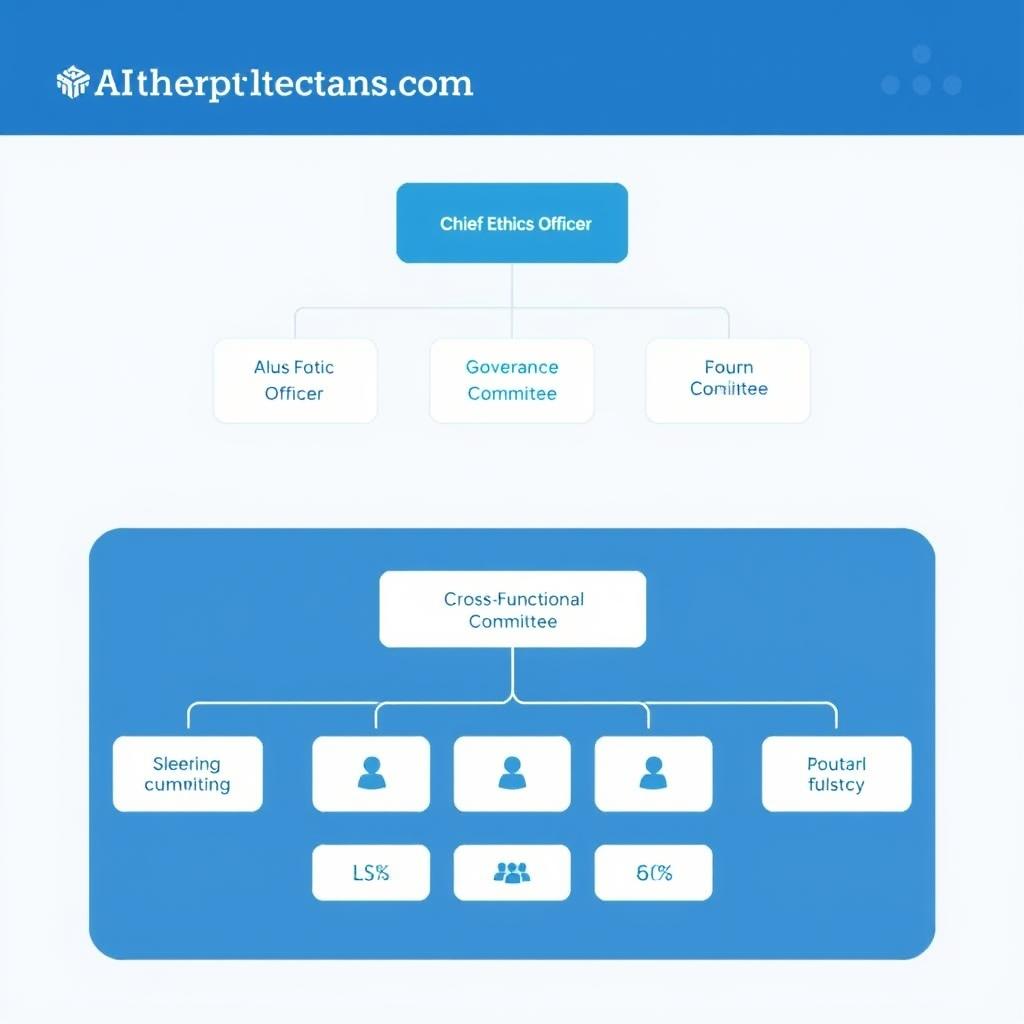
Leading organizations create dedicated roles for AI oversight, such as AI Ethics Officers or Responsible AI Committees. These cross-functional teams have the authority to review AI initiatives, assess risks, and even halt projects that don’t meet ethical standards.
Form an AI ethics committee or board composed of representatives from legal, compliance, data science, product, and DEI teams. This diverse composition ensures multiple perspectives are considered in AI governance.
🔍 Implement Regular Audits and Assessments
Responsible AI leaders don’t just deploy systems and hope for the best. They establish regular audit schedules and impact assessments that evaluate AI performance, bias, and security. These reviews should be documented and include action plans for addressing any issues identified.

✅ Enforce Human-in-the-Loop Decision Models
For high-stakes decisions, responsible leaders ensure that AI systems augment rather than replace human judgment. This means designing processes where AI provides recommendations but humans make final decisions, particularly in areas with significant ethical implications or potential for harm.
Leadership ownership is the missing piece in many AI failures. When things go wrong with AI, the root cause is often not technical but organizational—a lack of clear accountability and leadership commitment to responsible practices.

Advantages of Continuous Responsible AI Learning
The AI landscape evolves rapidly, with new capabilities, risks, and best practices emerging constantly. Leaders who foster a culture of continuous learning about responsible AI gain significant advantages in both risk management and innovation potential.
📚 Risk Awareness
Ongoing education keeps teams alert to emerging AI risks and vulnerabilities. This proactive awareness helps organizations identify potential issues before they manifest as problems, reducing the likelihood of ethical missteps or security breaches.
🌍 Bias Recognition
Continuous learning helps teams recognize subtle biases in data and models that might otherwise go undetected. This awareness is crucial for building fair AI systems that serve diverse populations equitably and avoid perpetuating historical inequities.
💡 Ethical Innovation
When teams understand responsible AI principles deeply, they can innovate more confidently within ethical boundaries. Rather than seeing ethics as a constraint, they recognize it as a framework that enables sustainable, trusted innovation.
“Responsible AI training is both risk insurance and an innovation enabler. Organizations that invest in continuous learning build teams that can push boundaries safely.”
According to Russell Reynolds Associates’ research, only 27% of leaders believe their organizations have provided adequate guidance to harness generative AI ethically and safely. This knowledge gap represents a significant opportunity for leadership differentiation through superior education and awareness.

Establishing an External Advisory Board for Responsible AI
External perspective is invaluable when navigating the complex ethical terrain of AI. An external advisory board brings independent expertise, diverse viewpoints, and enhanced credibility to your responsible AI efforts.
1️⃣ Define Clear Objectives
Begin by establishing specific goals for your advisory board. Are you seeking guidance on ethical frameworks, regulatory compliance, technical validation, or social impact assessment? Clear objectives will help you recruit the right experts and measure the board’s effectiveness.
2️⃣ Recruit Diverse Expertise
Effective advisory boards include experts from multiple disciplines: ethicists, legal specialists, technical AI experts, industry practitioners, and representatives from potentially affected communities. This diversity ensures comprehensive perspective on complex AI issues.
3️⃣ Establish Authority Structure
Define how the advisory board will interact with your organization’s decision-making processes. Will they have review authority for high-risk AI applications? Advisory capacity only? Direct reporting to the CEO or board? Clear authority structures prevent the board from becoming merely symbolic.
4️⃣ Set Regular Evaluation Cadence
Establish a consistent schedule for the advisory board to review AI initiatives, evaluate progress on responsible practices, and provide recommendations. Regular cadence ensures continuous improvement rather than point-in-time assessments.
5️⃣ Connect Recommendations to Action
Create formal processes for translating advisory board recommendations into organizational action. This might include designated implementation teams, progress tracking, and feedback loops to the advisory board on actions taken.
Advisory boards increase both credibility and accountability. They signal to stakeholders that your organization takes responsible AI seriously enough to invite external scrutiny, while also providing a mechanism for identifying blind spots your internal teams might miss.
Real-World Stories: The Impact of Responsible AI Leadership
Success Story: Proactive Oversight Prevents Reputational Damage

A major financial services firm established a cross-functional AI ethics committee with authority to review all customer-facing AI applications. During routine assessment, the committee identified that a new loan approval algorithm was inadvertently disadvantaging certain demographic groups despite not using protected characteristics as inputs.
Rather than deploying the system, they paused implementation, conducted a thorough bias investigation, and redesigned the model with fairness constraints. This proactive approach prevented potential regulatory issues and reputational damage while still achieving business objectives through responsible innovation.
Cautionary Tale: Ignoring Bias Concerns Leads to Backlash

A technology company rushed to market with an AI-powered hiring tool designed to increase efficiency in candidate screening. Despite internal data scientists raising concerns about potential gender bias during development, leadership prioritized speed to market over thorough bias testing.
After deployment, the tool showed significant bias against female candidates, leading to public backlash, regulatory scrutiny, and eventual abandonment of the product. The company not only lost its investment but suffered lasting reputational damage that affected other business lines.
These contrasting examples illustrate how leadership choices around responsible AI directly impact business outcomes. The difference wasn’t technical sophistication but governance approach—one organization embedded responsibility into its processes while the other treated it as an afterthought.
Common Mistakes Leaders Must Avoid in AI Governance
❌ Common Responsible AI Leadership Failures
- Using AI Without Oversight: Deploying AI systems without governance structures, treating them as purely technical rather than socio-technical systems with ethical implications.
- Treating Ethics as Marketing: Publishing AI principles without operational implementation, using ethics as a public relations tool rather than a governance framework.
- Ignoring Data Quality: Failing to invest in data governance, resulting in biased or incomplete datasets that produce flawed AI outputs regardless of model sophistication.
- No Clear Ownership: Diffusing responsibility across teams without clear accountability, creating situations where no one has authority to address ethical concerns.
- Absence of External Perspective: Relying solely on internal viewpoints, missing blind spots and biases that external experts or affected communities would readily identify.
These mistakes share a common thread: they treat responsible AI as a technical challenge rather than a leadership and governance imperative. Avoiding them requires commitment from the highest levels of the organization and integration of responsible practices into core business processes.
Responsible AI Leadership Checklist
✅ Publish Clear AI Ethics Principles
Develop and publicly share specific AI ethics principles that guide all AI initiatives in your organization. Ensure these principles address fairness, transparency, privacy, security, and human oversight.
✅ Implement Strong Data Governance
Establish comprehensive data governance practices that ensure quality, privacy, security, and appropriate use of data in AI systems. Document data lineage and validation processes.
✅ Assign Clear Accountability
Create specific roles and responsibilities for AI oversight, including executive sponsorship, ethics committees, and operational accountability for each AI system deployed.
✅ Train Teams on Responsible AI
Develop ongoing education programs that build awareness of bias, fairness, privacy, and ethical considerations in AI development and deployment.
✅ Establish External Advisory Input
Create mechanisms for external expert review of high-impact AI systems, whether through formal advisory boards or structured consultation processes.
✅ Communicate Transparently
Provide clear information to users about how AI systems work, what data they use, and how decisions are made. Ensure explanations are accessible to non-technical stakeholders.
✅ Audit and Improve Continuously
Implement regular assessment processes that evaluate AI systems for bias, performance, and alignment with ethical principles, with clear protocols for addressing issues identified.
Conclusion: Leading with Ethics is Leading the Future
Responsible AI isn’t just about avoiding harm—it’s about creating sustainable competitive advantage. Organizations that build trust through ethical AI practices gain customer loyalty, employee engagement, regulatory readiness, and innovation resilience that their competitors cannot easily replicate.
As we’ve explored throughout this guide, responsible AI leadership requires concrete actions: clear principles, strong governance, defined accountability, continuous learning, and external perspective. These elements form not just an ethical framework but a strategic approach to AI that builds lasting value.
“Technology only moves as fast as trust allows it to. Responsible AI isn’t slowing innovation — it’s the only way it can last.”
The question for leaders isn’t whether to implement responsible AI practices, but how quickly and effectively they can embed them into their organization’s DNA. What would your organization change today if ethics became a true strategy, not just a policy?
Frequently Asked Questions About Responsible AI Leadership
What is the difference between AI ethics and responsible AI?
AI ethics refers to the moral principles and values that guide AI development and use, while responsible AI is the operational implementation of those principles through governance, processes, and accountability structures. Ethics provides the “why,” while responsible AI delivers the “how” of ethical AI in practice.
How do we measure the ROI of responsible AI practices?
ROI for responsible AI can be measured through multiple lenses: risk mitigation (avoiding regulatory penalties and reputational damage), trust building (customer retention and loyalty), operational efficiency (reduced need for rework due to ethical issues), and innovation enablement (faster adoption of AI due to established trust). Organizations should develop metrics across these dimensions rather than seeking a single ROI figure.
Who should lead responsible AI initiatives in an organization?
Responsible AI requires both executive sponsorship and operational leadership. Ideally, a senior executive (CTO, CDO, or dedicated Chief Ethics Officer) provides strategic direction, while a cross-functional team with representation from legal, compliance, data science, product, and business units handles implementation. This ensures both top-down commitment and broad operational integration.
How do responsible AI practices apply to organizations just starting with AI?
Organizations early in their AI journey have an advantage—they can build responsible practices from the ground up rather than retrofitting them. Start by establishing clear principles, basic governance structures, and education programs before deploying your first AI systems. This foundation will scale more easily than trying to add responsibility after systems are entrenched.