
What if you could solve your biggest business problem in just five days? What if you could test ideas before spending months (or millions) building them? I’ve used this method daily, and the results? Game-changing. The Design Sprint methodology has transformed how I approach challenges, collaborate with teams, and bring ideas to life—and it can do the same for you.
The Big Challenge: Why Traditional Problem-Solving Fails
We’ve all been there. Projects that drag on for months. Teams stuck in endless debates about which direction to take. The fear of investing significant resources into an idea that might flop. Innovation feels risky when you’re committing so much time and money before knowing if your solution will actually work.
Traditional approaches to problem-solving often follow this frustrating pattern:
- Lengthy planning phases that delay actual progress
- Siloed teams working independently without alignment
- Decisions based on opinions rather than evidence
- Solutions built entirely before getting any user feedback
- Months of work potentially wasted if the idea fails
This approach is not just inefficient—it’s risky and demoralizing. Teams lose momentum, stakeholders grow impatient, and the market moves on while you’re still figuring things out. 🔥 There has to be a better way.
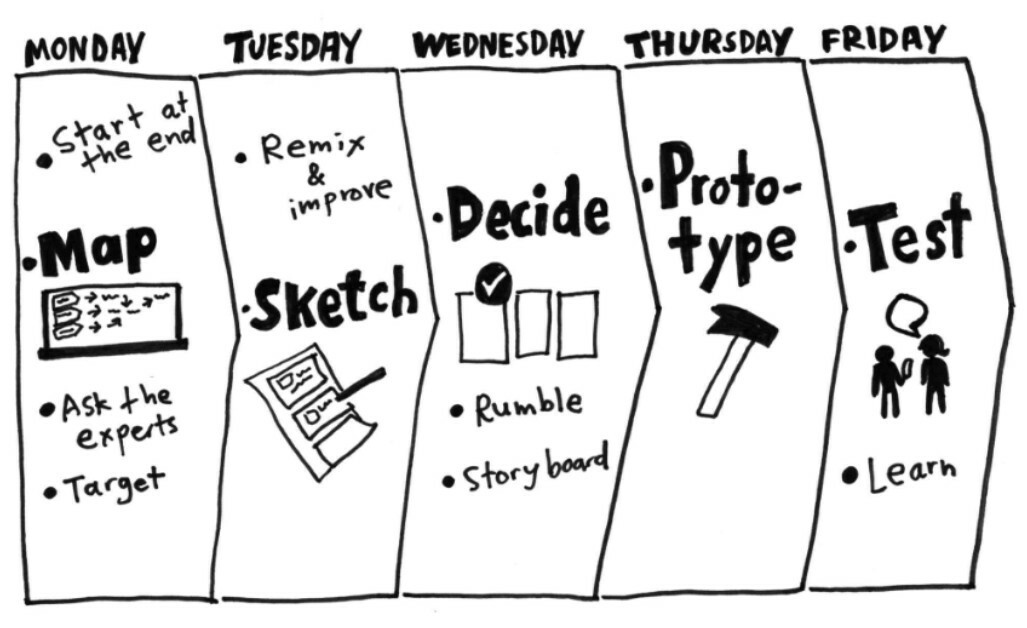
What Is a Design Sprint? The 5-Day Framework Explained
The Design Sprint methodology is a structured, time-constrained process created by Jake Knapp during his time at Google Ventures. It compresses potentially months of work into just five focused days. Think of it as a “greatest hits” compilation of business strategy, innovation, design thinking, and user testing—all packaged into a battle-tested recipe anyone can use.
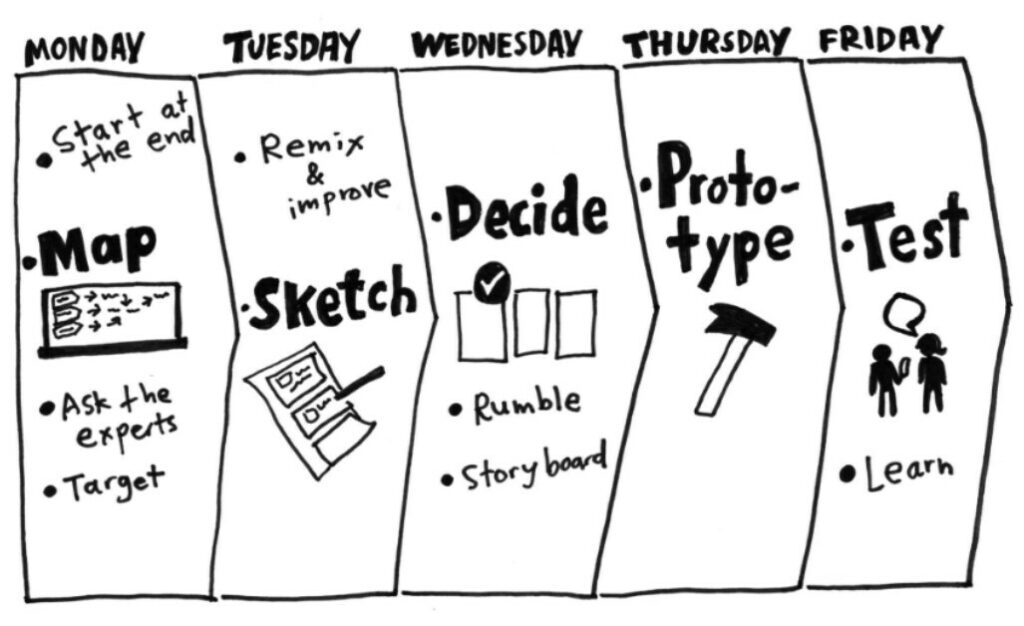
| Day | Focus | Activities | Outcome |
| 📌 Day 1: Map | Understanding the problem | Create a map of the challenge, set a long-term goal, and identify sprint questions | Clear target for the sprint |
| 📌 Day 2: Sketch | Generating solutions | Review existing ideas, sketch competing solutions individually | Range of potential solutions |
| 📌 Day 3: Decide | Choosing the best path | Critique solutions, make tough decisions, create a storyboard | Step-by-step plan for the prototype |
| 📌 Day 4: Prototype | Building a realistic facade | Create a prototype that appears real to users | Testable prototype |
| 📌 Day 5: Test | Getting user feedback | Interview real users and observe their reactions | Clear insights to guide next steps |
The beauty of this process is that it’s flexible enough to tackle almost any challenge—from improving an existing product to exploring entirely new business opportunities—while being structured enough to keep teams focused and productive.
Why the Design Sprint Methodology Works So Well
The Design Sprint isn’t just another workshop format—it’s a fundamentally different approach to problem-solving that addresses the core issues that plague traditional processes. Here’s why it’s so effective:
Compresses Months into Days
Instead of lengthy development cycles, you get answers quickly. It’s like a time machine for your project, allowing you to see the future without the usual wait. This compression creates urgency and focus that drives remarkable progress.
Aligns Teams Magically
The structured process gets everyone on the same page. Like a team sport where everyone knows their position and the game plan, the Design Sprint creates clarity and shared understanding that eliminates confusion and politics.
Reduces Risk Dramatically
By testing ideas with real users before making major investments, you avoid the costly “build it and hope” approach. It’s like having a crystal ball that shows you which paths lead to success and which lead to dead ends.
Unlocks Creative Potential
The “together alone” approach to ideation brings out the best thinking from everyone, not just the loudest voices. It’s like a creativity workout that builds your innovation muscles and produces better ideas than traditional brainstorming.

Google Ventures has used this methodology to help companies like Slack, Uber, and Blue Bottle Coffee solve critical challenges and launch successful products. The structured approach creates a safe space for innovation while ensuring that ideas are grounded in real user needs.
Step-by-Step Mini Guide: Start Your Own Design Sprint
Ready to try the Design Sprint methodology yourself? Here’s a simplified guide to get you started:
- Define One Critical Problem : Start by identifying a specific challenge that matters. Vague problems lead to vague solutions. For example, instead of simply stating “improve our product,” try framing it as “reduce the abandonment rate in our checkout process” or “simplify our onboarding flow for new users.” This specificity not only clarifies the goal but also helps the team focus their creative energies on a tangible issue that can be addressed effectively. It’s essential to involve various stakeholders in this discussion to ensure that the problem is relevant from multiple perspectives, thus enhancing the chances of a successful outcome.
-
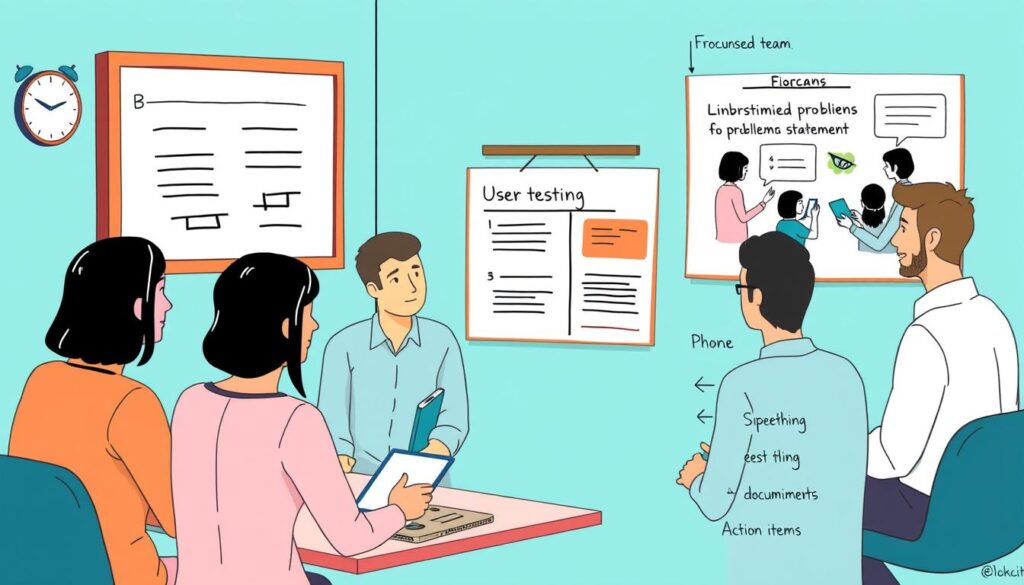
Assemble a Small, Focused Team
Gather 5-7 people with diverse perspectives and expertise. Include a decision-maker who can give final approval, subject matter experts, and someone who can represent the user’s perspective. Keep the team small enough to be nimble but diverse enough to bring different viewpoints. A well-rounded team might consist of a product manager, a designer, a developer, and a marketing specialist, each contributing unique insights that can lead to innovative solutions. The diversity in skill sets ensures that all angles of the problem are considered, which can significantly enhance the quality of the ideas generated during the sprint.
-
Block Uninterrupted Time
Set aside five consecutive days with no other commitments. This focused time is crucial for the magic to happen. If you absolutely can’t do five days, even a compressed two or three-day version can yield valuable results. The key is to create an environment where the team can immerse themselves fully in the problem-solving process without distractions. This dedicated time allows for deep dives into brainstorming, prototyping, and testing, which are essential for achieving meaningful insights and breakthroughs.
-
Follow the Daily Structure
Stick to the proven framework: map → sketch → decide → prototype → test. Each day has a specific purpose and builds on the previous day’s work. Trust the process, even when it feels uncomfortable. For instance, the mapping phase helps to visualize the problem and identify the user journey, while sketching allows for rapid idea generation. Following this structured approach ensures that the team remains aligned and focused on the goal, facilitating a smooth transition from one phase to the next. It’s important to encourage open communication and collaboration throughout this process to maximize creativity and innovation.
-
Start Small If Needed
You don’t need a full Sprint to benefit from the methodology. Try a “mini-sprint” by adapting key exercises for specific challenges. For example, use the “Crazy 8s” sketching exercise to generate ideas in a one-hour meeting, or conduct small-scale user testing on existing features. These smaller sessions can provide quick wins and insights that can be implemented immediately, serving as a valuable introduction to the Design Sprint methodology. Even if you can’t commit to a full week, these shorter engagements can still drive significant progress and foster a culture of innovation within your team.

Remember that the Design Sprint methodology is flexible. While the structure is important, you can adapt it to fit your specific needs and constraints. This adaptability means that teams can tailor the process to address their unique challenges and environments, ensuring that the methodology remains relevant and effective. The key is maintaining the core principles: focused time, structured process, individual work combined with group discussion, and testing with real users. These principles not only guide the sprint but also encourage creativity and collaboration, allowing teams to innovate while staying aligned with their goals. By prioritizing these elements, you can foster an atmosphere where ideas can flourish, leading to impactful solutions that resonate with actual user needs.
The Ultimate Design Sprint Resource: Sprint by Jake Knapp
Want to master the Design Sprint methodology?
The book that started it all: “Sprint: How to Solve Big Problems and Test New Ideas in Just Five Days” by Jake Knapp with John Zeratsky and Braden Kowitz from Google Ventures. This step-by-step guide gives you everything you need to run your own successful Design Sprints.
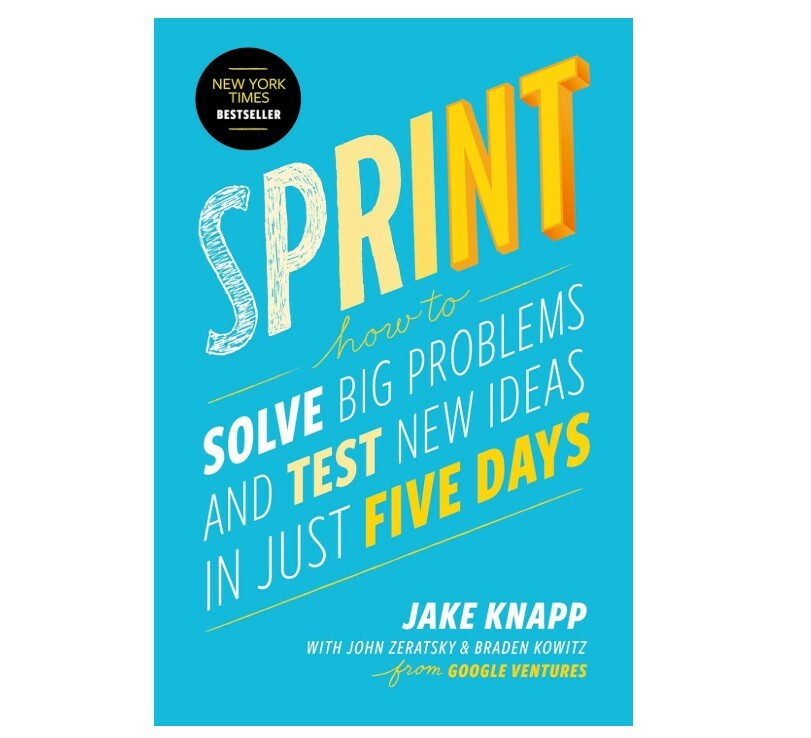
This isn’t just another business book—it’s a practical guide filled with real-world examples, checklists, and exercises that make it easy to implement the Design Sprint methodology in your own work. Jake Knapp developed this process over 150+ sprints with companies like Google, Slack, Blue Bottle Coffee, and more.
“The sprint gives our startups a superpower: They can fast-forward into the future to see their finished product and customer reactions, before making any expensive commitments.”
5 Mistakes to Avoid When Trying the Design Sprint Methodology
Even with the best intentions, it’s easy to fall into common traps when implementing a Design Sprint. Here are the pitfalls to watch out for:
Common Design Sprint Mistakes
- Picking vague problems – “Improve user experience” is too broad. “Reduce checkout abandonment by 20%” gives clear focus.
- Inviting too many people – More than 7-8 participants creates chaos and slows decision-making. Keep your team small and focused.
- Skipping the testing step – The real magic happens when you put your prototype in front of real users. Don’t skip this crucial validation.
- Treating it like a normal workshop – Design Sprints require full commitment and focus. No multitasking, no checking emails, no distractions.
- Not acting on the results – A Sprint is wasted if you don’t implement what you learn. Have a plan for how you’ll move forward after Day 5.
I’ve seen teams fall into each of these traps, and the results are always disappointing. The good news is that they’re all avoidable with proper planning and commitment to the process. When you respect the methodology and follow the structure, the results can be truly transformative. 🔥
Transform Your Problem-Solving with the Design Sprint Methodology
The Design Sprint methodology isn’t just another business fad—it’s a fundamental rethinking of how teams can work together to solve complex problems and validate ideas quickly. By compressing months of work into just five focused days, you can dramatically reduce risk, align your team, and get clear direction based on real user feedback.

I’ve experienced firsthand how this approach can transform not just individual projects but entire work cultures. Teams become more confident, decisions become clearer, and innovation becomes less risky. The Design Sprint methodology provides a structured process that brings out the best in everyone involved, allowing teams to think outside the box and develop effective solutions. This methodology is particularly valuable because it encourages collaboration and fosters an environment where creative ideas can flourish. By engaging with users and gathering feedback, teams can prototype and test solutions that address customer challenges, ensuring that the end product truly meets the needs of its users.
Don’t let big problems drag for months. Sprint them — and watch ideas come alive in just five days. This rapid cycle not only accelerates the development process but also minimizes the time spent on unproductive discussions. Whether you’re a startup founder, a product manager, a designer, or anyone facing complex challenges, the Design Sprint methodology offers a better way forward, guiding teams through essential steps to achieve success. It equips them with the tools to tackle uncertainty head-on, making it easier to pivot and adapt based on real user insights.
Ready to transform how you solve problems?
Get your copy of “Sprint” by Jake Knapp and start implementing this powerful methodology today.
This post contains affiliate links. I may earn a commission if you buy through my links.